
Quzhou, China
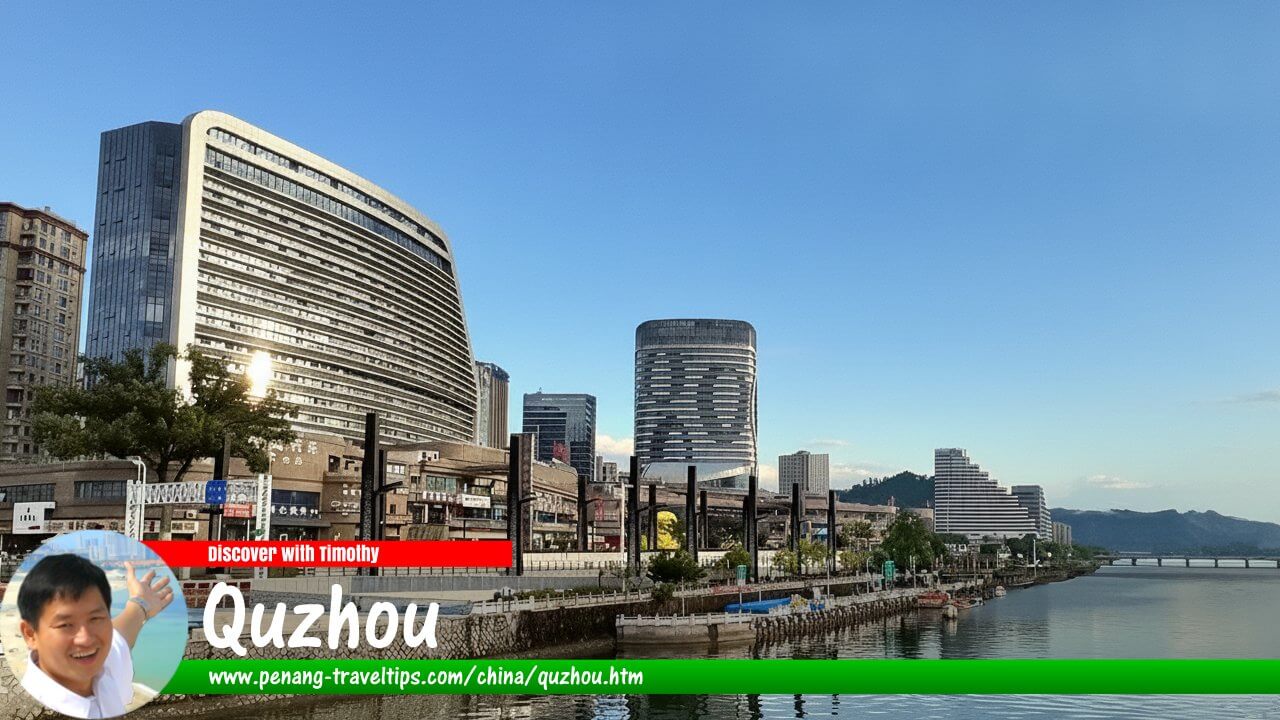 Quzhou, China (Photo edited with AI on 18 June 2026)
Quzhou (衢州, Qúzhōu) is a prefecture-level city in western Zhejiang Province, China. Located near the borders of Zhejiang, Jiangxi, Fujian, and Anhui provinces, it has long served as an important gateway connecting eastern China with the inland regions. Known for its rich cultural heritage, historic Confucian traditions, scenic mountains, and strategic transportation position, Quzhou occupies a significant place in the history and development of Zhejiang Province.1
Quick Facts
- English Name: Quzhou
- Chinese Name: 衢州
- Pinyin: Qúzhōu
- Province: Zhejiang
- Location: Western Zhejiang Province, China
- Area: Approximately 8,844 square kilometres
- Population: About 2.3 million
- Administrative Status: Prefecture-level city
- Known For: Confucian heritage, transportation hub, mountains, tea production
- Main Dialect: Quzhou Wu Chinese
- Major Airport: Quzhou Airport
- Major Railway Station: Quzhou Railway Station
Name and Etymology
The name Quzhou is written as 衢州 in Chinese and romanised as Qúzhōu. The character "衢" refers to a crossroads or intersection of important roads, while "州" means a prefecture or administrative region. The name reflects the city's historical role as a transportation junction where routes from several provinces converged.2
Throughout Chinese history, Quzhou occupied a strategic position between the prosperous Yangtze River Delta and the mountainous interior of southeastern China. Because merchants, officials, and travellers frequently passed through the area, the name became closely associated with connectivity and commerce.
Geography
Quzhou is situated in the western part of Zhejiang Province. It borders Hangzhou and Jinhua to the east, Anhui Province to the north, Jiangxi Province to the west, and Fujian Province to the south. This location places the city at an important crossroads between eastern and southern China.3
The terrain is predominantly mountainous and hilly. Several mountain ranges surround the city, creating a landscape characterised by forested slopes, river valleys, and fertile basins. The region is part of the upper reaches of the Qiantang River system, one of Zhejiang's most important river networks.
Numerous rivers flow through Quzhou, providing water resources for agriculture, industry, and domestic use. The Qu River, from which the city derives part of its identity, forms an important component of the local hydrological system.
Quzhou experiences a humid subtropical climate. Summers are warm and humid, while winters are relatively mild. Annual rainfall is abundant, supporting lush vegetation and productive agricultural activities. The region's mountains and forests contribute to a relatively high level of biodiversity.
Languages and Dialects
Mandarin is widely spoken and understood throughout Quzhou, particularly in government, education, and business settings. However, local residents also speak several regional Chinese dialects.
The most prominent local speech variety belongs to the Wu Chinese language family. The Quzhou dialect forms part of the western Wu dialect group and differs noticeably from standard Mandarin in pronunciation, vocabulary, and grammar.4
Because Quzhou lies near provincial borders, some communities also exhibit linguistic influences from Jiangxi and Fujian. This blending of dialect traditions reflects the city's historical role as a meeting point between different regions and cultures.
History
Human settlement in the Quzhou region dates back thousands of years. Archaeological discoveries indicate that people inhabited the area during prehistoric times, taking advantage of fertile valleys and abundant natural resources.
During the Qin and Han dynasties, the region gradually became integrated into the imperial administrative system. As China's transportation network expanded, Quzhou emerged as a key strategic location linking eastern coastal regions with inland territories.5
During the Tang and Song dynasties, Quzhou gained increasing importance as a commercial and administrative centre. Merchants travelling between Zhejiang, Fujian, Jiangxi, and Anhui often passed through the city. The prosperity generated by trade supported urban growth and cultural development.
Quzhou is especially renowned for its connection to Confucian culture. Descendants of Confucius settled in the city after periods of political upheaval in northern China. Over time, Quzhou became one of the most important centres of Confucian heritage outside the birthplace of Confucius in Shandong Province.
During the Ming and Qing dynasties, Quzhou continued to function as a regional hub. The city developed educational institutions, temples, markets, and administrative facilities that reinforced its position within southeastern China.
In the twentieth century, Quzhou experienced political, economic, and social transformations associated with the fall of the Qing Dynasty, the Republican period, the Second Sino-Japanese War, and the establishment of the People's Republic of China.
Since the beginning of China's economic reforms in the late twentieth century, Quzhou has modernised rapidly. Improvements in transportation infrastructure, industrial development, and tourism have contributed to sustained economic growth.
Economy and Products
Quzhou's economy is diverse and combines agriculture, manufacturing, mining, logistics, and tourism. Its strategic location continues to support trade and transportation activities.
Agriculture remains important in rural areas. Farmers cultivate rice, tea, citrus fruits, vegetables, and bamboo products. Tea production is especially significant, with several varieties grown in the mountainous regions surrounding the city.6
Forestry is another important economic sector. The extensive forest coverage provides timber, bamboo, and other forest products while supporting ecological conservation initiatives.
Industrial development has expanded considerably in recent decades. Major industries include machinery manufacturing, chemicals, building materials, electronics, renewable energy components, and food processing.
Quzhou is also known for mineral resources. Deposits of limestone and other construction materials support local manufacturing industries and infrastructure projects.
The tourism sector contributes increasingly to the local economy. Visitors are attracted by cultural heritage sites, mountain scenery, traditional villages, and religious landmarks.
How to Go There
By Air
Quzhou Airport (JUZ) serves the city and is located approximately 8 kilometres southwest of the city centre.7 The airport operates domestic flights to major Chinese cities such as Beijing, Shenzhen, Guangzhou, Chengdu, Chongqing, and Qingdao, depending on seasonal schedules and airline operations.
Airlines serving Quzhou Airport may include China Eastern Airlines, China Southern Airlines, Shenzhen Airlines, and other domestic carriers. The airport provides convenient access for travellers visiting western Zhejiang.
By Train
Quzhou Railway Station is located within the urban area and serves conventional and high-speed rail services. The station is situated on important railway corridors connecting Zhejiang with Jiangxi and other inland provinces.
High-speed trains connect Quzhou with Hangzhou, Shanghai, Ningbo, Jinhua, Nanchang, Fuzhou, and numerous other cities. Rail travel is one of the most convenient ways to reach Quzhou.
By Long-Distance Bus
Quzhou Long-Distance Bus Station provides intercity bus services to destinations throughout Zhejiang Province and neighbouring provinces. Buses connect Quzhou with Hangzhou, Jinhua, Wenzhou, Nanchang, Huangshan, and other regional centres.
By Road
Several expressways pass through Quzhou, including routes linking Zhejiang with Jiangxi and Fujian. Modern highways make driving to Quzhou relatively straightforward from many major cities in eastern China.
How to Travel Locally
Quzhou has a well-developed urban transportation system suitable for both residents and visitors.
- Taxis: Metered taxis are readily available throughout the city.
- E-Hailing Services: Ride-hailing platforms such as DiDi are widely used and provide convenient transportation.
- Public Buses: An extensive bus network connects residential districts, railway stations, tourist attractions, and commercial areas.
- Rental Cars: Car rental services are available for travellers wishing to explore rural areas and mountain attractions.
- Bicycles and Shared Bikes: Shared bicycle systems are common in urban districts.
Quzhou does not currently have a subway, MRT, LRT, or metro system. Traditional forms of transport such as trishaws, rickshaws, and tuk-tuks are generally not part of the city's regular public transportation network.
Tourist Attractions
1. Southern Confucius Temple (Nanzong Confucius Temple)
This temple is one of Quzhou's most important cultural landmarks. It honours descendants of Confucius who relocated to southern China. The complex contains historic halls, courtyards, and ceremonial architecture that reflect Confucian traditions.8
2. Jianglang Mountain
A UNESCO World Heritage Site component of the China Danxia landscape, Jianglang Mountain is famous for its dramatic sandstone peaks, cliffs, and hiking trails. It is one of the most scenic natural attractions in the region.
3. Longyou Caves
Located within the Quzhou region, these mysterious ancient underground caverns are among China's most intriguing archaeological sites. Their origins remain a subject of scholarly debate.
4. Yaowang Mountain
Yaowang Mountain is known for its forested landscapes, temples, and panoramic views. The area offers opportunities for hiking, photography, and nature appreciation.
5. Lanke Mountain
Associated with ancient Chinese legends and folklore, Lanke Mountain combines natural beauty with cultural significance. It is popular among both tourists and local residents.
6. Quzhou Ancient City Area
The historic urban district preserves traditional architecture, cultural sites, old streets, and heritage buildings that provide insight into Quzhou's long history.
7. Fushan Park
Located within the city, Fushan Park offers green spaces, walking paths, viewpoints, and recreational facilities. It is a popular destination for relaxation and leisure.
8. Tianji Longmen Scenic Area
This scenic destination features waterfalls, mountain streams, forests, and dramatic rock formations. Visitors can enjoy outdoor activities and picturesque landscapes.
9. Gen Palace Buddha Cultural Tourism Zone
This cultural attraction showcases elaborate root carvings, Buddhist art, gardens, and exhibition halls. It combines traditional craftsmanship with religious culture.
10. Qianjiangyuan National Park Area
Located near the source region of the Qiantang River, this protected area preserves forests, rivers, and wildlife habitats while providing eco-tourism opportunities.
Quzhou, China is  the Map of Cities in China
References
- Quzhou Municipal Government
- Encyclopaedia Britannica – Quzhou
- Zhejiang Provincial Government
- Ethnologue Languages Database
- China.org.cn Historical Resources
- The State Council of the People's Republic of China
- Travel China Guide – Quzhou
- UNESCO World Heritage Centre
Page Details
This page was created/modified on 18 June 2026. Hi, my name is Timothy and created it from my research, for my own entertainment, knowledge and to satisfy my curiosity. I am providing the information to you in good faith and hope it is useful. I try to get the details as accurate as possible. I also try to update the page whenever I stumble on new details. So this and all my other pages are perpetual work in progress. If you discover any error, please politely inform me, pointing out where the error lies, and I will correct it as soon as possible. Your helpfulness will keep this page accurate, relevant and helpful to those who need the information.