
Liangzhu: Jade, Ritual, and the Rise of Sacred Power in Neolithic China
In the misty wetlands of the Yangtze River Delta, an extraordinary culture rose around 3300 to 2300 BCE — one defined not by war or metal, but by jaderitual, and a deeply spiritual relationship with the land. This was the Liangzhu Culture (良渚文化, Liángzhǔ wénhuà), one of the most advanced Neolithic societies ever uncovered in East Asia.
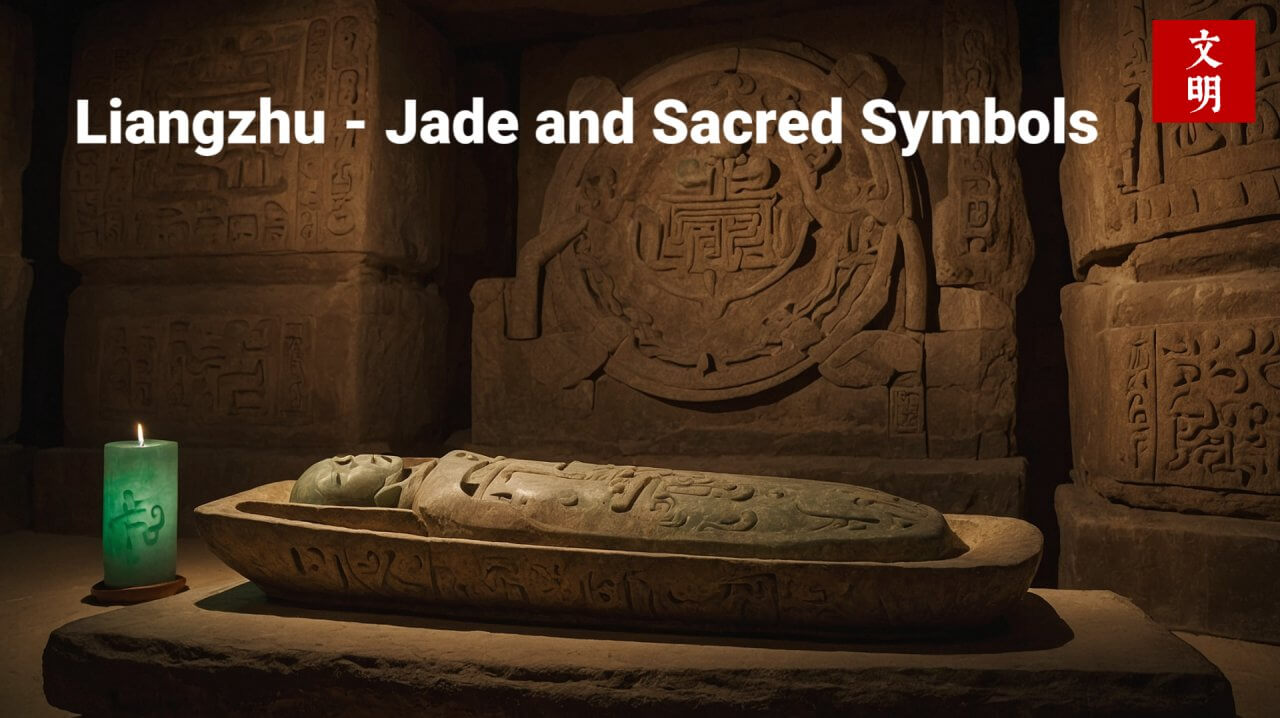
At the heart of Liangzhu’s identity was its jade craftsmanship. Artifacts such as the cong (琮) and bi (璧) — enigmatic shapes rich with symbolism — were carefully buried in elite tombs. These ritual objects, often intricately carved and highly polished, appear to have held religious or cosmological significance. Their presence points to a highly stratified society, where power was expressed through access to sacred materials and ceremonies.
Liangzhu also displayed early signs of urban planning. Excavations have revealed raised platforms, large-scale palatial structures, defensive moats, and a remarkable system of dams and canals — suggesting advanced engineering and a centralized authority capable of organizing labor and managing water resources.
The society appears to have been theocratic, with religious elites wielding both spiritual and administrative power. The burial of jade artifacts alongside individuals of high status implies a belief in the afterlife and the role of ritual in affirming social order.
Though Liangzhu eventually declined — possibly due to environmental changes — it left a legacy of symbolism and spiritual authority that would echo through Chinese civilisation. The reverence for jade, the integration of ritual into governance, and the use of cosmological symbols all prefigure elements that would emerge later in dynastic China.
In Liangzhu, we see the glimmer of sacred kingship — the idea that rulers derived their power not merely from strength, but from alignment with heaven, earth, and ritual truth.
Related Topics:
Back to Prehistoric China: The Dawn of Chinese Civilisation
Page Details
This page was created on 11 July 2025.Featured Video: The Shang Dynasty
 Latest Pages & Updates
Buy Me A Coffee
If you enjoy the information I provide and want to support the work I do, please buy me a coffee! I appreciate it immensely, thank you so much!
