
Lishui, China
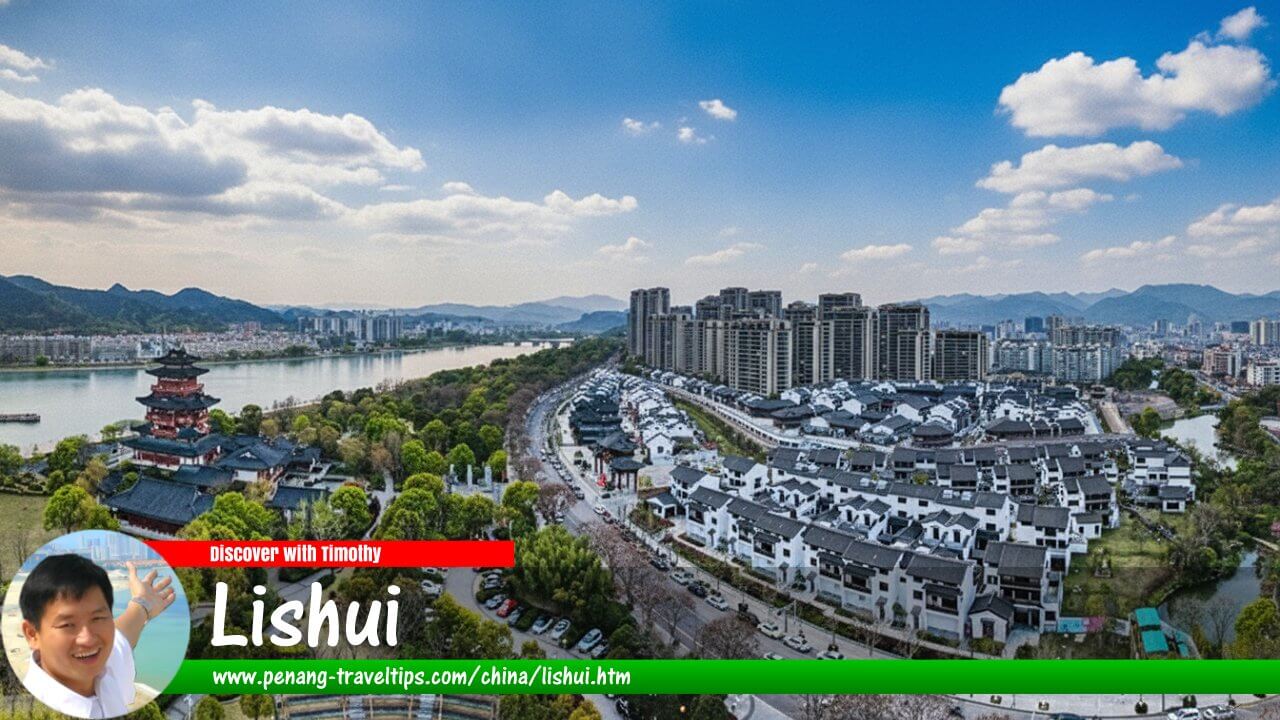 Lishui, China (Photo edited with AI on 18 June 2026)
Lishui (丽水; Lìshuǐ) is a prefecture-level city in southwestern Zhejiang Province, China. Renowned for its lush mountains, dense forests, crystal-clear rivers, and well-preserved traditional villages, Lishui is often regarded as one of the most ecologically rich regions in eastern China. The city occupies a large portion of Zhejiang's mountainous interior and is celebrated for its natural beauty, biodiversity, and cultural heritage. The name "Lishui" literally means "Beautiful Water," derived from the Chinese characters 丽 (beautiful) and 水 (water), reflecting the area's scenic rivers and waterways that have sustained local communities for centuries.1
Quick Facts
- Chinese Name: 丽水
- Pinyin: Lìshuǐ
- Province: Zhejiang
- Administrative Status: Prefecture-level city
- Location: Southwestern Zhejiang Province
- Population: Approximately 2.5 million
- Area: About 17,300 square kilometres
- Famous For: Mountains, forests, ecological tourism, traditional villages
- Major River: Ou River
- Climate: Humid subtropical climate
- Main Industries: Agriculture, forestry, manufacturing, tourism
- Nickname: Zhejiang's Green Valley
Name and Etymology
The name Lishui is written as 丽水 in Chinese and pronounced Lìshuǐ in Mandarin. The city's name has ancient origins and is associated with the area's abundant rivers and picturesque landscapes. The character 丽 means "beautiful" or "elegant," while 水 means "water."
The name reflects the scenic environment that has characterized the region for centuries. Numerous rivers, streams, waterfalls, and reservoirs flow through the mountainous terrain, creating a landscape that inspired poets, scholars, and travelers throughout Chinese history. The city's identity remains closely linked to its natural beauty and ecological resources.2
Geography
Lishui is located in the southwestern part of Zhejiang Province and borders Fujian Province to the south. It is one of Zhejiang's largest municipalities by land area and is distinguished by its mountainous topography. More than eighty percent of the municipality consists of hills and mountains, making it one of the least urbanized and most environmentally preserved regions in eastern China.
The city lies within the Wuyi Mountain range and contains extensive forests that contribute significantly to Zhejiang's ecological health. Forest coverage exceeds eighty percent in many parts of the municipality, earning Lishui recognition as one of China's leading ecological cities.
The Ou River, Zhejiang's second-longest river, originates in the mountains of Lishui and flows eastward toward Wenzhou and the East China Sea. Numerous tributaries, reservoirs, and streams support agriculture, fisheries, and local communities.
Several peaks exceed 1,500 metres in elevation. The highest mountain in Zhejiang Province, Huangmaojian Peak, rises within Longquan County-level City under Lishui's administration, reaching approximately 1,929 metres above sea level.
Lishui experiences a humid subtropical climate characterized by warm summers, mild winters, and abundant rainfall. The mountainous terrain creates microclimates that support diverse plant and animal species. Misty valleys, bamboo forests, and tea-growing hillsides contribute to the city's scenic appeal.3
Languages and Dialects
Mandarin Chinese is the official language used in education, government, and business throughout Lishui. However, a variety of local Chinese dialects are also spoken.
The predominant local speech belongs to the Wu Chinese language family, particularly dialects related to those spoken elsewhere in southern Zhejiang. These dialects can differ significantly from Standard Mandarin in pronunciation and vocabulary.
In areas bordering Fujian Province, some residents speak dialects influenced by Min Chinese. Hakka Chinese is also spoken in certain communities, especially in regions with historical Hakka settlement.
The linguistic diversity of Lishui reflects centuries of migration, trade, and cultural exchange between Zhejiang, Fujian, and neighbouring provinces. While younger generations increasingly use Mandarin, local dialects remain important markers of regional identity and cultural heritage.4
History
The history of Lishui extends back more than two thousand years. Archaeological evidence suggests that human settlements existed in the region during prehistoric times. The fertile river valleys and abundant natural resources supported early agricultural communities.
During the Qin Dynasty (221–206 BC), the region became integrated into China's imperial administrative system. Subsequent dynasties established counties and administrative centres that laid the foundation for modern Lishui.
During the Tang Dynasty (618–907), the area gained greater prominence due to improvements in transportation and agriculture. The mountainous terrain encouraged the development of distinctive local cultures and traditions.
The Song Dynasty (960–1279) brought economic growth as tea cultivation, forestry, and handicraft production expanded. Local scholars contributed to Chinese literature and philosophy, while villages prospered through trade.
During the Ming and Qing dynasties, Longquan became famous throughout China for its celadon ceramics and sword-making traditions. Longquan celadon achieved international recognition and was exported to many parts of Asia, the Middle East, and Europe.
Because of its mountainous location, Lishui was relatively insulated from some of the political upheavals experienced in China's coastal regions. Traditional architecture, customs, and village life survived longer than in many urban areas.
Following the establishment of the People's Republic of China in 1949, transportation infrastructure improved significantly. Roads, railways, and modern industries gradually transformed the local economy while preserving much of the region's natural environment.
Today, Lishui is recognized nationally as an ecological development zone and a model for balancing environmental protection with economic growth.5
Economy and Products
Lishui's economy is based on a combination of agriculture, forestry, manufacturing, tourism, and ecological industries. The city's extensive forests provide timber, bamboo, medicinal herbs, and other forest products.
Agriculture remains important, particularly tea cultivation. High-quality green tea is produced throughout the region and sold across China. Other agricultural products include rice, vegetables, fruits, mushrooms, and edible fungi.
Lishui is especially famous for Longquan celadon ceramics, one of China's most celebrated ceramic traditions. Longquan celadon was inscribed on UNESCO's Representative List of the Intangible Cultural Heritage of Humanity and continues to be produced by skilled artisans.
The city is also known for Longquan swords, which have been manufactured using traditional techniques for centuries. These swords are valued both as cultural artifacts and decorative items.
Manufacturing industries include machinery, electrical equipment, metal products, and environmentally friendly technologies. However, compared with other Zhejiang cities, Lishui places greater emphasis on sustainable development and ecological protection.
Tourism has become a major source of income. Visitors are attracted by mountain scenery, ancient villages, cultural heritage sites, and outdoor recreational opportunities. Eco-tourism initiatives have helped generate economic benefits while preserving natural resources.6
How to Go There
By Air
Lishui currently does not have a major commercial airport serving large-scale passenger traffic. Most visitors arrive through nearby airports such as Wenzhou Longwan International Airport, Hangzhou Xiaoshan International Airport, or Quzhou Airport.
Wenzhou Longwan International Airport is approximately 120 kilometres from central Lishui and offers flights operated by Air China, China Eastern Airlines, China Southern Airlines, XiamenAir, Hainan Airlines, and other carriers to destinations throughout China and selected international cities.
By Rail
Lishui Railway Station is located in Liandu District, the urban centre of the city. The station is served by China's high-speed railway network and provides convenient connections to Hangzhou, Shanghai, Ningbo, Wenzhou, Jinhua, Fuzhou, Xiamen, and Beijing.
Additional stations within the municipality serve counties such as Qingtian, Jinyun, and Longquan, improving regional accessibility.
By Road
Several expressways connect Lishui with major cities in Zhejiang and neighbouring provinces. Long-distance buses operate regularly between Lishui and Hangzhou, Shanghai, Ningbo, Wenzhou, Fuzhou, and other urban centres.
The principal long-distance bus terminal is Lishui Passenger Transport Centre, located in Liandu District.
How to Travel Locally
Lishui offers several transportation options for local travel.
- Taxis: Metered taxis are widely available throughout urban areas.
- E-Hailing Services: Didi and other ride-hailing platforms operate extensively within the city.
- Public Buses: An extensive bus network connects districts, railway stations, and tourist attractions.
- Tourist Coaches: Special services operate to major scenic areas and rural attractions.
- Bicycles and Shared Bikes: Bicycle-sharing schemes are available in urban areas.
Lishui does not currently have a subway, MRT, LRT, tram, trishaw, rickshaw, or tuk-tuk system. Most visitors rely on buses, taxis, private vehicles, or ride-hailing services for transportation.
Tourist Attractions
1. Xiandu Scenic Area
Located in Jinyun County, Xiandu Scenic Area is famous for dramatic rock formations, rivers, temples, and picturesque landscapes that have appeared in numerous Chinese films and television productions.
2. Guyan Huaxiang Scenic Area
This attraction combines the historic Guyan Weir with the artistic village of Huaxiang. Visitors can enjoy river scenery, galleries, traditional architecture, and cultural activities.
3. Longquan Celadon Museum
The museum showcases the history and craftsmanship of Longquan celadon ceramics, including rare artifacts and educational exhibits.
4. Longquan Mountain Scenic Area
Home to Zhejiang's highest peaks, this area offers hiking trails, forests, waterfalls, and spectacular mountain views.
5. Yunhe Rice Terraces
These magnificent terraced fields are among the most beautiful agricultural landscapes in China. The terraces are especially photogenic during sunrise and sunset.
6. Qingtian Stone Carving Museum
Qingtian is famous for its traditional stone carving art. The museum displays intricate carvings and explains the history of this local craft.
7. Nanjianyan Scenic Area
Known for cloud seas, waterfalls, bamboo forests, and mountain villages, Nanjianyan is a popular destination for photographers and nature enthusiasts.
8. Shisi Shan Ancient Villages
Several well-preserved historic villages in Lishui showcase traditional architecture, ancestral halls, and centuries-old cultural traditions.
9. Baishanzu National Park
This protected area contains rich biodiversity, old-growth forests, rare wildlife, and excellent opportunities for ecological tourism.
10. Qingtian Overseas Chinese Hometown Scenic Area
Qingtian is famous for its large overseas Chinese community. Visitors can learn about migration history, cultural exchanges, and the influence of overseas Chinese on local development.
Lishui, China is  the Map of Cities in China
References
- Encyclopaedia Britannica – Zhejiang Province
- Travel China Guide – Lishui Travel Guide
- China Daily – Lishui Ecological Development
- Ethnologue – Languages and Dialects of Zhejiang
- Lishui Municipal Government
- UNESCO Intangible Cultural Heritage – Traditional Longquan Celadon
Page Details
This page was created/modified on 18 June 2026. Hi, my name is Timothy and created it from my research, for my own entertainment, knowledge and to satisfy my curiosity. I am providing the information to you in good faith and hope it is useful. I try to get the details as accurate as possible. I also try to update the page whenever I stumble on new details. So this and all my other pages are perpetual work in progress. If you discover any error, please politely inform me, pointing out where the error lies, and I will correct it as soon as possible. Your helpfulness will keep this page accurate, relevant and helpful to those who need the information.