
Fuzhou, China
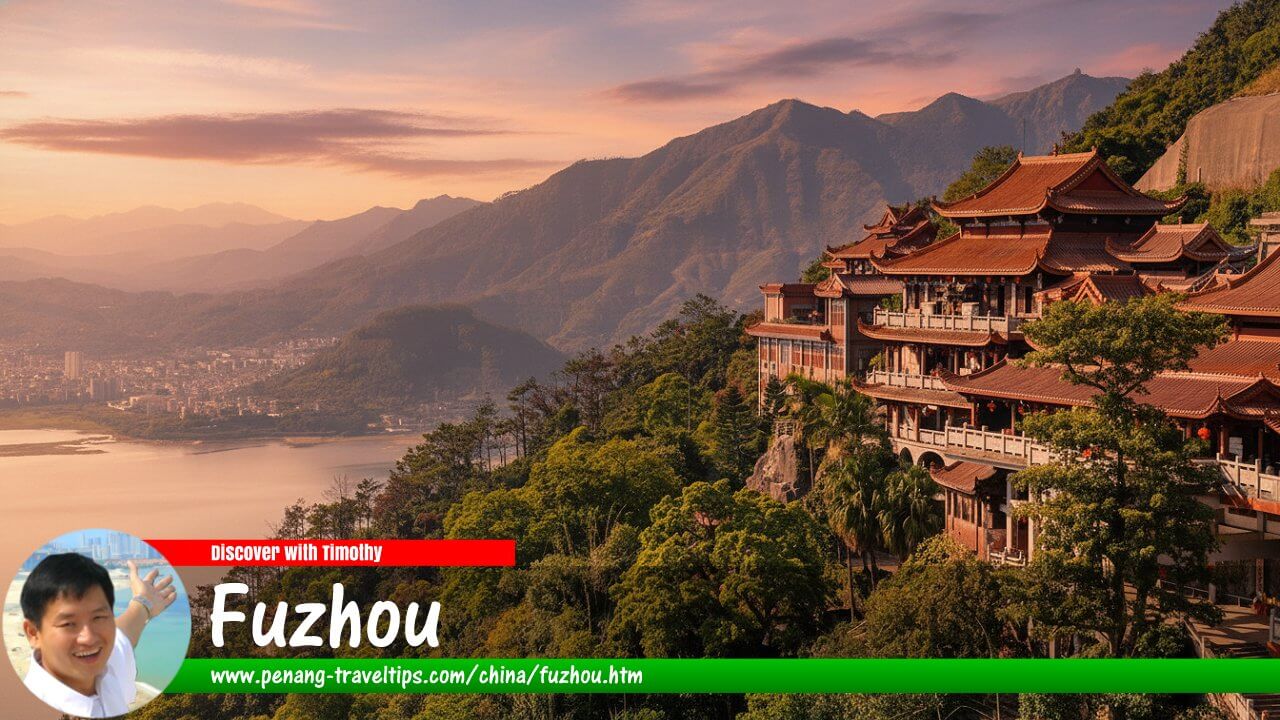 Fuzhou, China (Photo edited with AI on 15 June 2026)
Fuzhou (Chinese: 福州; pinyin: Fúzhōu) is the capital and one of the largest cities of Fujian Province in southeastern China. Situated near the mouth of the Min River and facing the East China Sea, Fuzhou has served as an important administrative, commercial, and cultural center for more than two thousand years. The city is renowned for its historic role in maritime trade, its abundance of banyan trees, its traditional architecture, and its strategic position as a gateway between inland China and the wider Asia-Pacific region.1
The name "Fuzhou" literally means "Fortunate Prefecture" or "Blessed Prefecture." The character "Fu" (福) means good fortune, happiness, or blessing, while "Zhou" (州) historically referred to an administrative prefecture. The name was formally adopted during the Tang Dynasty when administrative divisions were reorganized. Over the centuries, Fuzhou became known as the political and cultural center of Fujian Province and remains so today.2
Quick Facts
- English Name: Fuzhou
- Chinese Name: 福州
- Pinyin: Fúzhōu
- Province: Fujian
- Status: Provincial Capital
- Location: Southeastern China
- River: Min River
- Nickname: Banyan City
- Climate: Humid Subtropical
- Main Airport: Fuzhou Changle International Airport
- Known For: Maritime history, hot springs, traditional architecture, tea culture
- Major Industries: Electronics, manufacturing, shipping, tourism, trade
Geography
Fuzhou is located in eastern Fujian Province on the lower reaches of the Min River, approximately 50 kilometers from the East China Sea. The city occupies a strategic position between mountainous inland regions and China's southeastern coastline, making it a natural transportation and trading hub.1
The municipality covers a diverse landscape that includes river valleys, coastal plains, offshore islands, hills, and mountain ranges. Much of the urban area lies on an alluvial plain formed by the Min River, while surrounding districts extend into forested highlands. The river remains an important geographical feature and has played a significant role in the city's development throughout history.
Fuzhou experiences a humid subtropical climate characterized by mild winters, hot and humid summers, and abundant rainfall. Typhoons occasionally affect the region during the summer and autumn months. The city's lush vegetation and extensive tree cover have earned it the nickname "Banyan City," reflecting the numerous banyan trees planted throughout its streets and parks.3
History
The history of Fuzhou stretches back more than two millennia. Archaeological evidence indicates that the area was inhabited long before recorded history. During ancient times, the region formed part of the Minyue Kingdom, established by descendants of the Yue peoples who occupied southeastern China after the fall of the Qin Dynasty.1
In 202 BC, the Minyue Kingdom was established with its capital near present-day Fuzhou. The kingdom maintained a degree of independence until it was absorbed into the Han Empire in 110 BC. Following incorporation into imperial China, the region gradually became more integrated into national administrative and economic systems.
Fuzhou gained greater prominence during the Tang Dynasty, when it became an important prefectural capital. Trade expanded significantly as merchants used the Min River to transport goods between inland Fujian and coastal ports. During this period, the city emerged as a center of scholarship, religion, and regional administration.2
The Song Dynasty witnessed substantial economic growth, with Fuzhou becoming a major center for shipbuilding, ceramics, tea production, and overseas commerce. Maritime trade flourished as Chinese merchants established commercial connections throughout Southeast Asia and beyond.
During the Ming and Qing dynasties, Fuzhou remained an important provincial capital. The city became particularly renowned for its shipbuilding industry. In the nineteenth century, the Fujian Navy Yard was established, helping modernize China's naval capabilities and introducing Western engineering techniques to the region.4
Following the First Opium War, Fuzhou was opened as a treaty port under the Treaty of Nanjing in 1842. Foreign merchants, missionaries, and diplomats established a presence in the city, contributing to economic development and cultural exchange. Tea exports became especially significant, with large quantities shipped to Europe and North America.1
During the twentieth century, Fuzhou experienced periods of conflict, reconstruction, and modernization. Following the establishment of the People's Republic of China in 1949, the city expanded its industrial base and transportation infrastructure. Economic reforms beginning in the late 1970s accelerated development and strengthened ties with overseas Chinese communities, particularly those in Southeast Asia.
Today, Fuzhou is a modern metropolitan center that combines historical heritage with rapid economic growth while serving as the political, economic, and cultural heart of Fujian Province.
Economy and Products
Fuzhou possesses one of the most important regional economies in southeastern China. As the capital of Fujian Province, it serves as a center for government administration, commerce, education, finance, and technology.
Manufacturing remains a major component of the local economy. Industries include electronics, information technology, machinery, automotive components, petrochemicals, textiles, and food processing. Industrial parks throughout the municipality attract both domestic and foreign investment.
The city's port facilities support extensive domestic and international trade. Goods are exported throughout Asia, Europe, and North America, while imports support regional manufacturing and consumption. Its proximity to Taiwan and Southeast Asia further enhances its economic significance.
Traditional products associated with Fuzhou include tea, lacquerware, wood carvings, cork paintings, and handicrafts. Fuzhou jasmine tea is particularly famous and has been exported for generations. The city is also known for its seafood products, owing to its coastal location and fishing industry.5
Tourism contributes significantly to the local economy. Visitors are attracted by historical landmarks, hot springs, temples, mountains, and cultural sites. Educational institutions and research centers also support innovation and workforce development.
How to Go There
By Air
Fuzhou Changle International Airport (FOC) is located approximately 45 kilometers southeast of the city center in Changle District. The airport serves as the primary aviation gateway to Fujian Province and offers both domestic and international services.6
Airlines operating at the airport include Air China, China Eastern Airlines, China Southern Airlines, XiamenAir, Hainan Airlines, Sichuan Airlines, Spring Airlines, and several international carriers. Domestic flights connect Fuzhou with Beijing, Shanghai, Guangzhou, Shenzhen, Chengdu, Chongqing, Xi'an, Kunming, and many other cities. International services operate to destinations in Southeast Asia, East Asia, and other regions.6
By Train
Fuzhou Railway Station is located north of the city center and serves both conventional and high-speed rail services. It provides convenient connections to Beijing, Shanghai, Hangzhou, Nanjing, Xiamen, Shenzhen, and numerous other Chinese cities.7
Fuzhou South Railway Station is situated in Cangshan District and handles many high-speed train services on China's rapidly expanding rail network.
By Long-Distance Bus
Major long-distance bus terminals include Fuzhou North Bus Station, Fuzhou South Bus Station, and several regional transport centers. These facilities offer services to destinations throughout Fujian Province and neighboring provinces such as Zhejiang, Jiangxi, and Guangdong.
How to Travel Locally
Fuzhou has a comprehensive urban transportation network that makes travel around the city convenient.
- Metro: Fuzhou Metro operates multiple lines connecting residential districts, business centers, railway stations, and major attractions.
- Public Buses: Extensive bus services cover nearly all parts of the municipality.
- Taxis: Metered taxis are widely available and relatively affordable.
- E-Hailing Services: Didi is the primary ride-hailing platform and functions similarly to Uber.
- Airport Express Services: Shuttle buses connect the airport with various parts of the city.
- Bicycles and Shared Bikes: Public bicycle-sharing systems and app-based bike rentals are popular.
Traditional forms of transport such as trishaws, rickshaws, and tuk-tuks are generally not used in modern Fuzhou, having been replaced by buses, taxis, metro services, and private vehicles.
Tourist Attractions
Three Lanes and Seven Alleys (Sanfang Qixiang)
This historic district is one of China's best-preserved traditional urban neighborhoods. It contains Ming- and Qing-era residences, museums, courtyards, and cultural sites that showcase the city's rich heritage.8
West Lake Park
One of the oldest parks in China, West Lake Park features scenic lakes, pavilions, gardens, bridges, and walking paths. It is a popular destination for both residents and visitors.
Drum Mountain (Gushan)
Located east of the city, Drum Mountain is one of Fuzhou's most famous natural attractions. Visitors can enjoy hiking trails, temples, scenic viewpoints, and panoramic views of the surrounding region.
Yongquan Temple
Situated on Drum Mountain, Yongquan Temple is a significant Buddhist monastery known for its historic buildings, religious importance, and peaceful setting.
Fuzhou National Forest Park
This large protected area contains forests, botanical collections, waterfalls, and recreational facilities, making it a popular destination for nature lovers.
Pingtan Island
Located within Fuzhou Municipality, Pingtan Island is China's fifth-largest island and is known for its beaches, coastal scenery, wind-carved rock formations, and maritime culture.
Fujian Museum
The museum houses extensive collections related to Fujian's history, archaeology, art, and ethnic cultures, offering visitors insight into the province's development.
Fuzhou Hot Springs
The city is famous for its natural hot springs, which have been used for recreation and therapeutic purposes for centuries. Numerous resorts and bathhouses offer visitors opportunities to enjoy these geothermal resources.
Xichan Temple
One of Fuzhou's most important Buddhist temples, Xichan Temple is known for its beautiful architecture, historic relics, and tranquil atmosphere.
Min River Waterfront
The riverfront area provides attractive promenades, parks, modern architecture, and scenic views that highlight the city's relationship with the Min River.
Fuzhou, China on  the Map of Cities in China
References
- Encyclopaedia Britannica – Fuzhou
- Wikipedia – Fuzhou
- UNESCO World Heritage Centre
- Encyclopaedia Britannica – Fuzhou Navy Yard
- UNESCO Intangible Cultural Heritage – Fuzhou Jasmine Tea
- Wikipedia – Fuzhou Changle International Airport
- Wikipedia – Fuzhou Railway Station
- UNESCO – Three Lanes and Seven Alleys
Page Details
This page was created/modified on 14 June 2026. Hi, my name is Timothy and created it from my research, for my own entertainment, knowledge and to satisfy my curiosity. I am providing the information to you in good faith and hope it is useful. I try to get the details as accurate as possible. I also try to update the page whenever I stumble on new details. So this and all my other pages are perpetual work in progress. If you discover any error, please politely inform me, pointing out where the error lies, and I will correct it as soon as possible. Your helpfulness will keep this page accurate, relevant and helpful to those who need the information.