

Clan Temples of Penang
 Go Back - Latest PENANG Sights/Streets/New Properties > Malaysia > World | Hokkien : Lessons : Dictionary | YouTube | Facebook | About Me : Contact Me
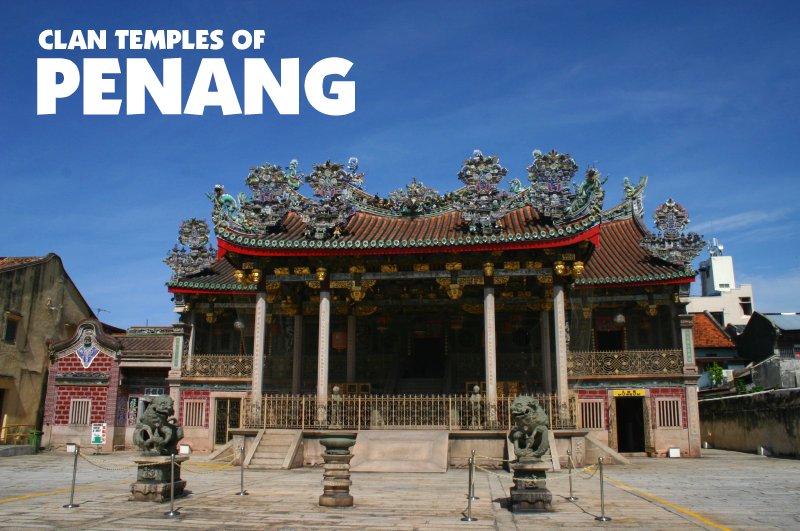 Clan Temples of Penang (22 July 2015)
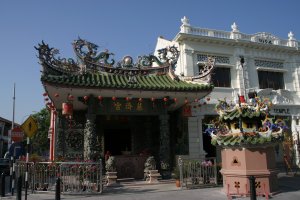
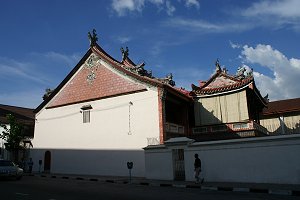
Penang Clan Temples are built by the different clan associations in Penang during the mid 19th to the early 20th centuries. These clan temples are constructed for the purpose of worshipping the patron deities of the clans as well as to venerate ancestors. Within these clan temples are usually ancestral tablets of those who have departed. Hanging on the walls of these temples are the photographs of clan members who have achieved academic or financial success. These are usually the benefactors of the clan associations.
Clan associations in Penang are created by Hokkien Chinese who immigrated here in since the early 19th century. They set up clan associations to assist their fellowmen, to settle into the new environment and find employment. Eventually, those who have settled and prospered give back by assisting newcomers of a similar clan. Although the clans were initially set up for the sake of offering helping, by the second half of the 19th century, intense rivalry manifested itself as one clan tried to outdo the other. Nevertheless, the Hokkien clans remained close-knit against peoples of other dialect groups, such as the Hakka and the Cantonese.
The wealthiest of the Hokkien clans is the Khoo, which built the most extravagant clan temple, Leong San Tong Khoo Kongsi, at Cannon Square. It is not the only Khoo clan temple in Penang. A short distance away is the quieter, less visited Boon San Tong Khoo Kongsi, also another clan temple belonging to a subset of the main Khoo clan. Within Penang, five Hokkien clan associations are regarded as the backbone of the Penang Hokkien clan associations. They are the Khoo, the Tan, the Lim, the Cheah and the Yeoh, and they each has a clan temple somewhere in George Town. On this page, we will visit these clan temples and get to know them more closely.
In addition to the Hokkien clans, the Cantonese built district associations which have similar functions to the Hokkien associations. Among these are the Ng Fook Thong District Association and the San Wooi Wooi Koon. We are now in the process of documenting other clan associations and district associations and will post them on this page when ready.
In addition to this list, view also the list of Clan Associations in Penang.
Location of the Clan Temples in Penang on the map
List of the Clan Temples in Penang
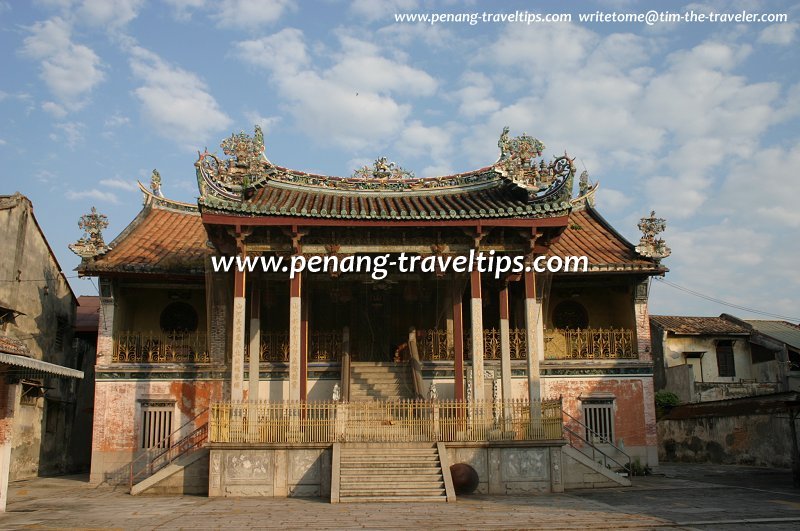

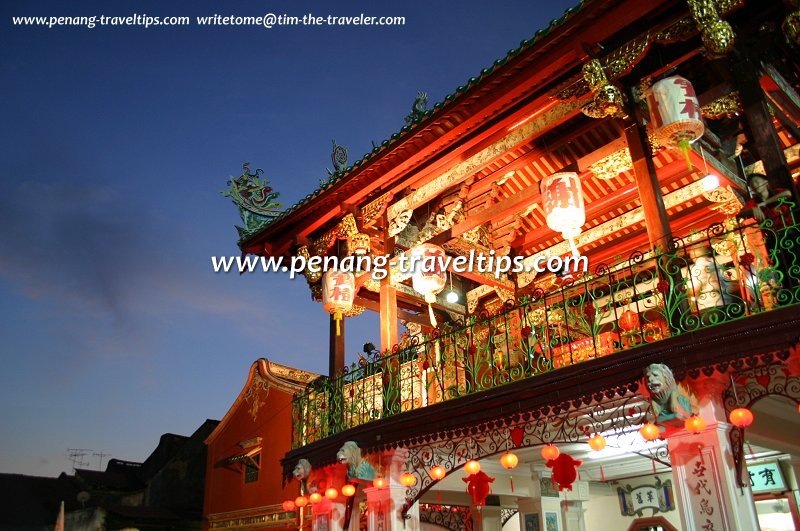
Cheah Kongsi 
This is one of the oldest Chinese clan association and ancestral temple in Penang, with the front gate now facing Beach Street.Details
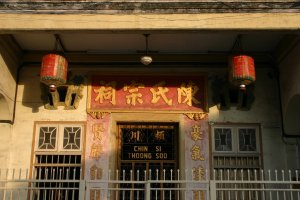
Chin Kongsi (Chin Si Thoong Soo) 
Chinese clan association with ancestral temple on King Street.Details
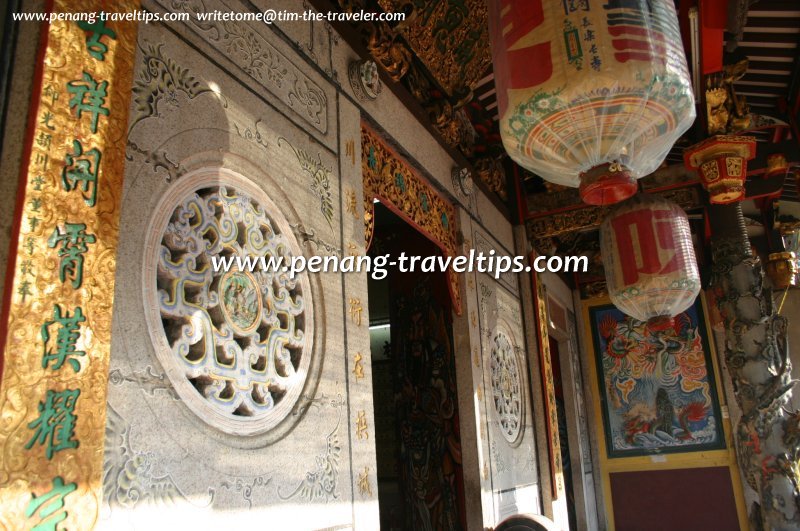
Eng Chuan Tong Tan Kongsi 
Ancestral temple of the Tan clan, located within its own courtyard at Teh Tan Court.Details

Hainan Temple 
Temple of the Hainanese people for the worship of the goddess of the sea, located on Muntri Street.Details
Heong San Hoay Kuan / Chong San Wooi Koon 
Chinese clan temple, renamed to honour Soon Yat-Sen, located on King Street.Details
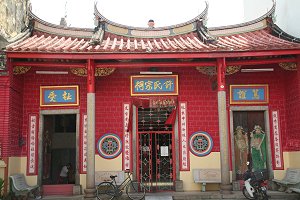

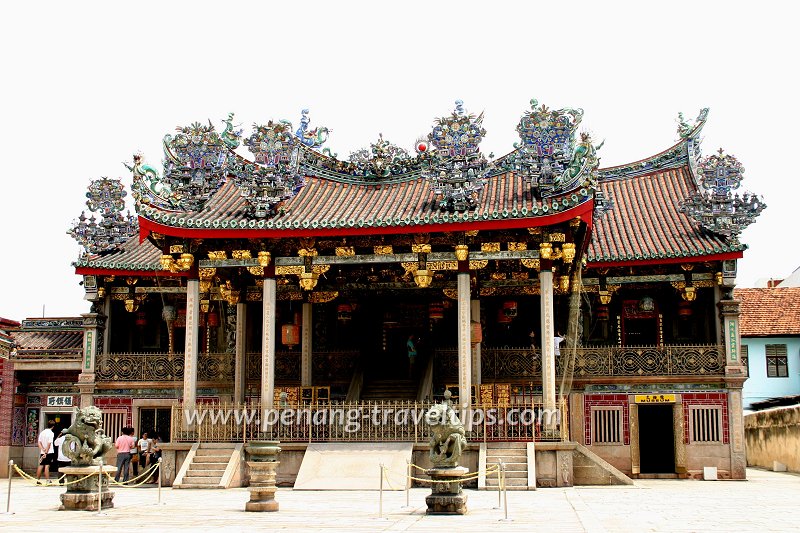
Khoo Kongsi (Leong San Tong) 
The most opulent clan ancestral temple in Penang, built by the Khoo clan, located within its own courtyard at Cannon Square.Details
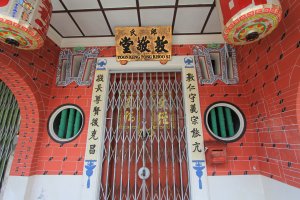
Khoo Si Toon Keng Tong Kongsi 
A minor ancestral temple for a branch of the Khoo clan, located on Beach Street.Details
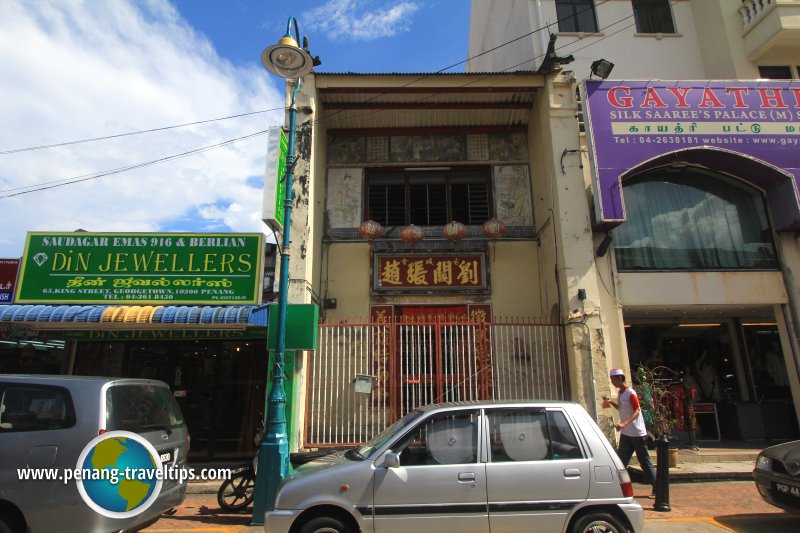


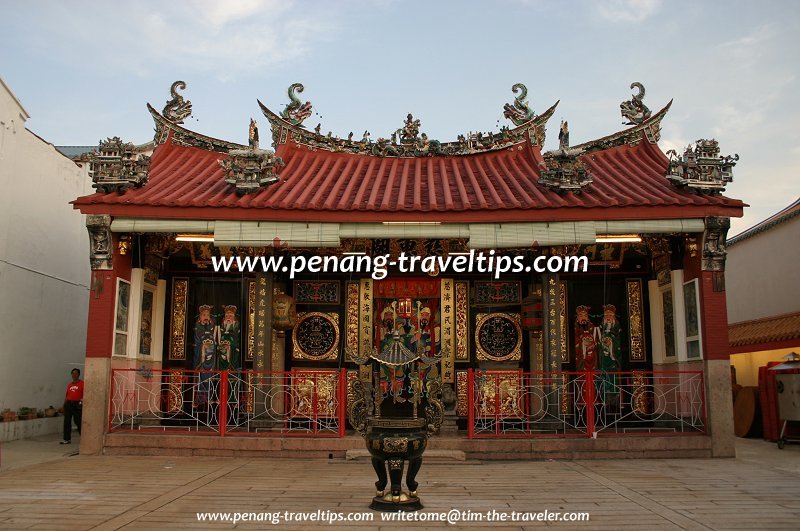
Lim Kongsi (Kew Leong Tong) 
Lim clan ancestral temple, entered from the side on Ah Quee Street.Details
Lo Pan Hang
Love Lane
Also called Lo Pan Ku Miau, this is the temple of the Carpenters' Guild on Love Lane.Details
Meng Eng Soo 
Also called the Ghee Hin Memorial Hall of Heroes, this ancestral temple of the Ghee Hin Society is on Rope Walk.Details
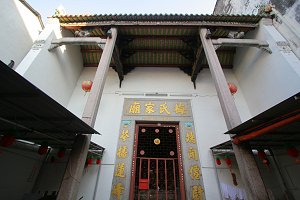

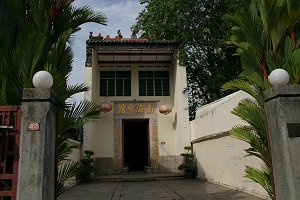
Nam Hooi Wooi Koon 
Cantonese district association
Cantonese district association on Chulia Street.Details
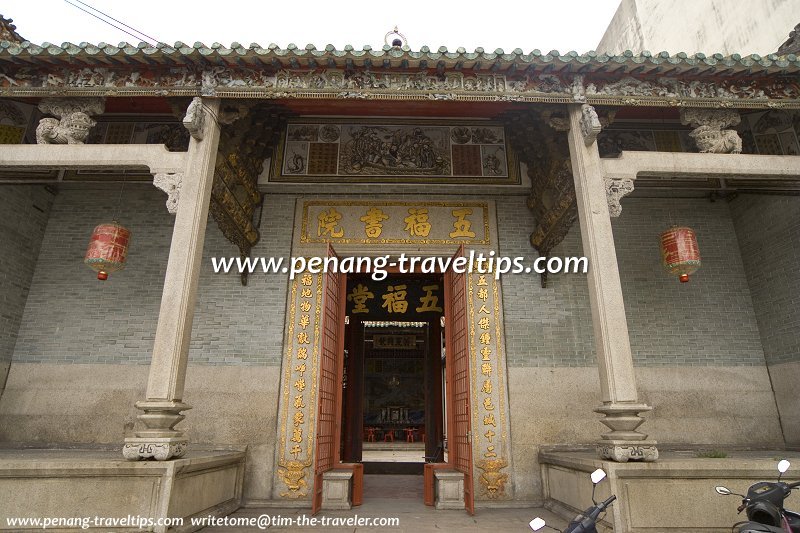

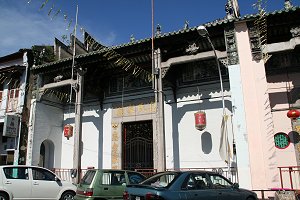

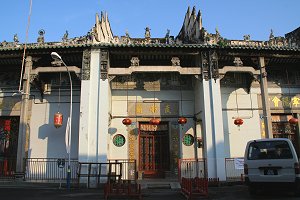

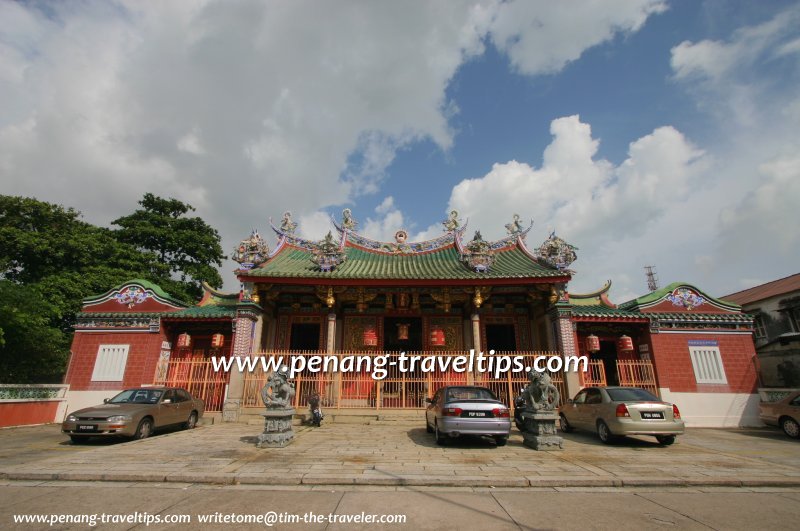

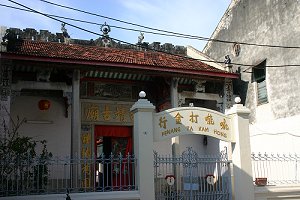
Penang Goldsmith Association 
Temple of the Chinese goldsmiths in Penang, located on Muntri Street.Details
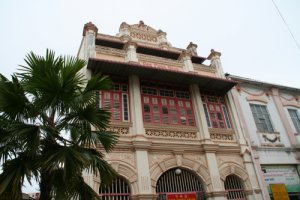
Poe Choo Seah 
Association for the Straits-born Chinese in George Town, Penang, located on King Street.Details
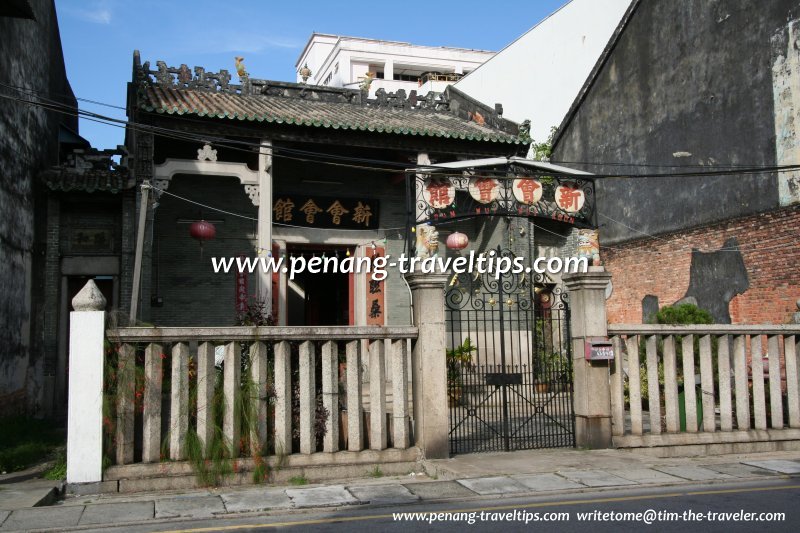

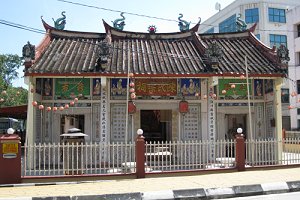

Tan Sie Eng Chuan Tong, Bukit Mertajam
Ancestral temple of the Tan clan in Bukit Mertajam.GPS: 5.37568, 100.46508
Details
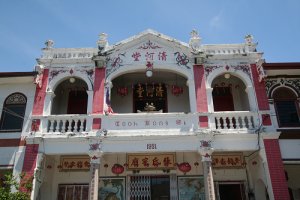
Teoh Kongsi 
Teoh Clan Association
Ancestral hall and temple of the Teoh clan, located within its own courtyard off Carnarvon Street.Details
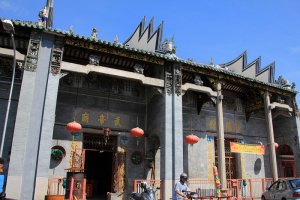



Clan Association Offices
Also listed here are clan association offices that operate without a detached clan temple within their premises. There are numerous clan associations for the various Chinese surnames in Penang, many of which have their premises in shoplots all over George Town.- Low Clan Association occupies a shoplot along Magazine Road.
 Buy, rent or sell properties in Penang
Do you have a property for sale or to rent out? Are you looking to buy or rent a property? Get in touch with me. WhatsApp me (Timothy Tye) at 012 429 9844, and I will assign one of my property agents to serve you. I will choose the agent for you, according to your property needs. So when you message me, provide me some details of what you need, whether to sell, to buy, to rent or to rent out, and what type of property, is it condo, apartment, house, shop, office or land.Adakah anda mempunyai hartanah untuk dijual atau disewakan? Adakah anda ingin membeli atau menyewa hartanah? Hubungi saya. WhatsApp saya (Timothy Tye) di 012 429 9844, dan saya akan menugaskan salah seorang ejen hartanah saya untuk berkhidmat kepada anda. Saya akan pilih ejen untuk anda, mengikut keperluan hartanah anda. Oleh itu, apabila anda menghantar mesej kepada saya, berikan saya beberapa butiran tentang apa yang anda perlukan, sama ada untuk menjual, untuk membeli, untuk disewakan atau untuk disewakan, dan jenis hartanah apakah itu kondo, pangsapuri, rumah, kedai, pejabat atau tanah.
您有待出售或出租的房产吗? 您想购买或租赁房产吗? 与我联系。 WhatsApp 我 (Timothy Tye) 012 429 9844,我将指派一名房地产经纪人为您服务。 我会根据您的房产需求,为您选择代理。 因此,当您给我发消息时,请向我提供一些您需要的详细信息,无论是出售、购买、出租还是出租,以及房产类型,是公寓、公寓、房屋、商店、办公室还是土地。
New Properties in Penang
Looking to buy property in Penang? Get the e-brochures right here without having to visit or contact individual developers.- Anggun Residences E-Brochure, Batu Kawan
- Aston Acacia E-Brochure, Bukit Mertajam
- Beacon Executive Suites E-Brochure, George Town
- Beverly Heights @ Bukit Gambir E-Brochure, Gelugor
- BM Highland E-Brochure, Bukit Mertajam
- Cypress Villa E-Brochure, Sungai Ara
- D'Zone Condominium E-Brochure, Teluk Kumbar
- Elements Garden E-Brochure, Butterworth
- Ferringhi Residence 2 E-Brochure, Batu Ferringhi
- GEM Residences E-Brochure, Prai
- Golden Triangle 2 E-Brochure, Sungai Ara/Relau
- Grace Residence E-Brochure, Jelutong
- Granito @ Permai E-Brochure, Tanjong Bungah
- Green City Residence E-Brochure, Jelutong
- Havana Beach Residences E-Brochure, Bayan Lepas
- Imperial Residences E-Brochure, Sungai Ara/Relau
- Imperial Grande E-Brochure, Sungai Ara/Relau
- Lucerne Residence E-Brochure, Bayan Lepas
- Mezzo @ The Light City E-Brochure, Gelugor
- Middleton E-Brochure, Gelugor
- Orchard Villa 3 E-Brochure, Simpang Ampat
- Primero Heights E-Brochure, Permatang Pauh
- Queens Waterfront Q2 E-Brochure, Bayan Lepas
- Royale Heights @ Tambun Royale City E-Brochure, Simpang Ampat
- Royale Infinity @ Tambun Royale City E-Brochure, Simpang Ampat
- Rubica @ Harbour Place E-Brochure, Butterworth
- Sensasi Commercial Suites E-Brochure, Batu Kawan
- Setia Sky Ville E-Brochure, Jelutong
- Setia Sky Vista E-Brochure, Sungai Ara/Relau
- Setia V Residence E-Brochure, Gurney Drive
- Sinaran Residence E-Brochure, Batu Kawan
- Sky @ TriPark E-Brochure, Bukit Mertajam
- Skyridge Garden E-Brochure, Tanjong Tokong
- Starhill Luxury Residences E-Brochure, Gelugor
- Straits Residences E-Brochure, Tanjong Tokong
- Taman Nuri Emas E-Brochure, Nibong Tebal
- The Light Collection IV E-Brochure, Gelugor
- The Loft @ Southbay E-Brochure, Batu Maung
- The Terraces Condominium E-Brochure, Bukit Jambul
- Trehaus Condo Villas E-Brochure, Bukit Jambul
- Triuni Residences E-Brochure, Batu Uban
- Urban Suites E-Brochure, Tanjong Tokong
- Valencia Residence E-Brochure, Bayan Lepas
- Vertu Resort E-Brochure, Batu Kawan
- Vivo Executive Apartment E-Brochure, Batu Kawan
- Viluxe E-Brochure, Batu Kawan
- Waterside Residence E-Brochure, Gelugor
Latest updates on Penang Travel Tips
Discover with Timothy YouTube Channel
PG Food Channel
Learn Penang Hokkien YouTube Channel
SojiMart Videos
Share your travels and/or ask a travel-related question
Join the Penang Travel Tips Facebook Group to share photos, tips and anything related to your travels, or ask travel-related questions.
 Map of Roads in Penang
Looking for information on Penang? Use this Map of Roads in Penang to zoom in on information about Penang, brought to you road by road. Discover with Timothy
Let me take you to explore and discover Penang through my series of walking tours on YouTube. You may use these videos as your virtual tour guide. At the beginning of each video, I provide the starting point coordinates which you may key into your GPS, Google Maps or Waze, to be navigated to where I start the walk, and use the video as your virtual tour guide.Disclaimer
Please use the information on this page as guidance only. The author endeavours to update the information on this page from time to time, but regrets any inaccuracies if there be any.Latest from Discover with Timothy: Gurney Bay - what to see and do there
About this website

Hello and thanks for reading this page. My name is Timothy and my hobby is in describing places so that I can share the information with the general public. My website has become the go to site for a lot of people including students, teachers, journalists, etc. whenever they seek information on places, particularly those in Malaysia and Singapore. I have been doing this since 5 January 2003, for over twenty years already. You can read about me at Discover Timothy. By now I have compiled information on thousands of places, mostly in Peninsular Malaysia and Singapore, and I continue to add more almost every day. My goal is to describe every street in every town in Malaysia and Singapore.
Robbie's Roadmap
- Episode 1: Robbie's Journey to Financial Freedom
- Episode 2: Lost in America
- Episode 3: The Value of Money
- Episode 4: The Mentor
- Episode 5: The Thing that Makes Money
- Episode 6: The walk with a Billionaire
- Episode 7: The Financial Freedom Awakening
- Episode 8: Meet Mr Washington
- Episode 9: The Pizzeria Incident
Copyright © 2003-2024 Timothy Tye. All Rights Reserved.