
Grosvenor Crescent, London
Grosvenor Crescent is a short but prestigious street in the heart of Belgravia, London, linking Grosvenor Place in the west with Belgrave Square in the east. With its sweeping architecture and elite postcode, it is among the most exclusive residential addresses in the United Kingdom.
Location and Layout
Grosvenor Crescent is situated in the City of Westminster, within the affluent district of Belgravia. It runs approximately 274 metres (898 feet) from west to east. The crescent-shaped street curves gently as it connects Grosvenor Place to Belgrave Square, and has several side streets branching off it, including:
- Lanesborough Place – a short cul-de-sac to the north.
- Grosvenor Crescent Mews – a private gated mews to the south.
- Halkin Street – an arterial road leading southeast to Hyde Park Corner.
- Wilton Crescent
The street is one-way, with traffic flowing from east to west (i.e. from Belgrave Square towards Grosvenor Place). This helps to regulate the otherwise heavy vehicle movement expected near Hyde Park Corner and Buckingham Palace.
History of Grosvenor Crescent
Grosvenor Crescent was developed in the mid-19th century, during the height of Belgravia's transformation into a fashionable residential quarter. This transformation was largely led by the Grosvenor family, the Dukes of Westminster, whose vast landholdings included large areas of Mayfair and Belgravia.
The name "Grosvenor Crescent" reflects this aristocratic heritage. The term Grosvenor is pronounced GROH-vnər, and in the International Phonetic Alphabet (IPA), it is transcribed as /ˈɡroʊvnər/. The name has been in use since the road's construction, paying tribute to the family's ownership and influence over the area.
Character of the Street
The character of Grosvenor Crescent is quintessentially Belgravian—elegant, tranquil, and deeply refined. The buildings are primarily white stucco-fronted townhouses, many of which have been subdivided into luxury flats or repurposed as diplomatic residences. The atmosphere is calm and residential, despite the street's proximity to Hyde Park Corner, one of London's busiest junctions.
Notable Landmarks and Nearby Attractions
Though the street itself is residential, there are several noteworthy sights within easy walking distance:
- Belgrave Square – a leafy garden square surrounded by grand embassies and period townhouses.
- The Lanesborough Hotel – a luxury five-star hotel on the corner of Hyde Park Corner.
- Hyde Park – one of London's largest and most famous parks, located just a few hundred metres away.
- Apsley House – the former home of the Duke of Wellington, now a public museum.
- Buckingham Palace – less than 10 minutes' walk to the northeast.
Property and Real Estate
Grosvenor Crescent ranks among the most expensive residential streets in the UK. As of 2024, properties here often sell for £3,000 to £5,000 per square foot, depending on finish, aspect, and building history. For example, a 2,500 sq ft (232 sq m) apartment may command upwards of £10 million.
Most of the buildings are converted townhouses, offering large lateral apartments or entire multistorey homes. Interiors tend to be finished to ultra-prime standards, often with concierge services, private lifts, and underground parking. Compared to the wider London market, where the average property value stands closer to £750 per square foot, Grosvenor Crescent represents the very pinnacle of exclusivity.
Transport and Accessibility
Nearest London Underground Stations
- Hyde Park Corner (Piccadilly line) – approximately 3 minutes' walk.
- Victoria Station (Victoria, District, Circle lines + National Rail) – about 10 minutes' walk.
- Green Park (Jubilee, Victoria, Piccadilly lines) – 12 minutes on foot.
Nearby Bus Routes
Several bus routes stop at Hyde Park Corner, including:
- Route 2 – to Marylebone and Norwood.
- Route 16 – to Cricklewood and Victoria.
- Route 38 – to Clapton and Victoria.
- Route 148 – to White City and Camberwell.
These frequent services offer convenient access across central London for both residents and visitors.
Fun Fact
In 2017, Grosvenor Crescent was officially named the most expensive street in England and Wales, based on Land Registry data. The average property value that year was over £16.9 million1. The street has since retained its reputation for prestige and privacy, favoured by overseas dignitaries, global executives, and London's elite.
Quick Facts
- Location: Belgravia, City of Westminster
- Length: 274 metres (898 feet)
- Direction: One-way, east to west
- Named After: The Grosvenor family (pronounced GROH-vnər /ˈɡroʊvnər/)
- Built: Mid-19th century
- Character: Residential, grand architecture, luxury apartments
- Side Streets: Lanesborough Place, Grosvenor Crescent Mews, Halkin Street
- Nearby Sights: Belgrave Square, Hyde Park, Buckingham Palace
- Average Property Price (2024): £3,000–£5,000 per sq ft
- Nearest Tube: Hyde Park Corner (Piccadilly line)
- Bus Routes: 2, 16, 38, 148 at Hyde Park Corner
- Fun Fact: England's most expensive street in 2017
Who Were the Grosvenors, and How Did They Acquire This Land?
If you're wondering why so many streets and squares in this area bear names like Grosvenor, Belgrave, Eaton, or Wilton, it's because much of this land once belonged to the powerful Grosvenor family. To find out how they came to own vast swathes of Mayfair, Belgravia, and Pimlico — and whether they had any ties to the government or the royal family — read our in-depth article here.
References
Map of Grosvenor Crescent, London
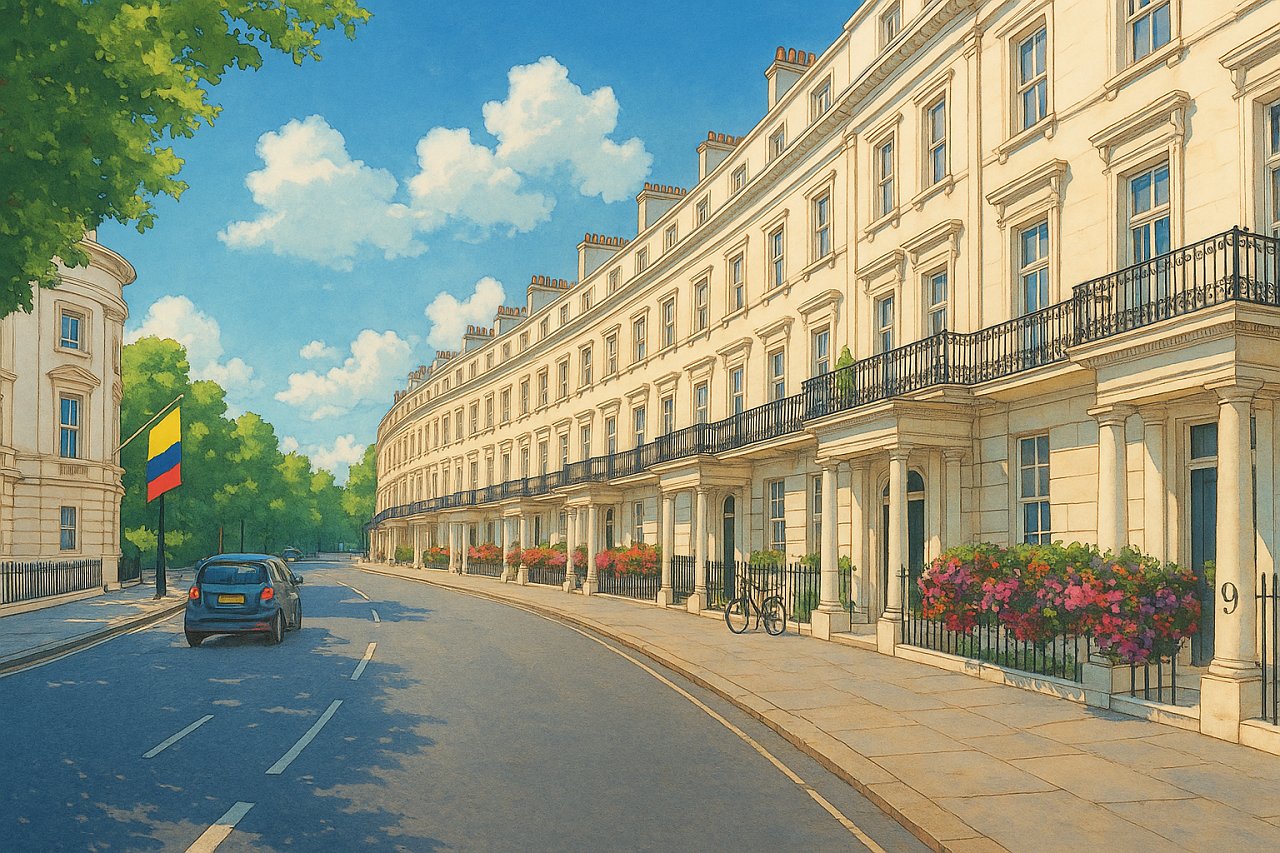
Painting of Grosvenor Crescent, London (View image in full size)

Page Details
This page was created on 20 May 2025. Hi, my name is Timothy and created it from my research, for my own entertainment, knowledge and to satisfy my curiosity. I am providing the information to you in good faith and hope it is useful. I try to get the details as accurate as possible. I also try to update the page whenever I stumble on new details. So this and all my other pages are perpetual work in progress. If you discover any error, please politely inform me, pointing out where the error lies, and I will correct it as soon as possible. Your helpfulness will keep this page accurate, relevant and helpful to those who need the information.Moving to London?
New to London and need a place to live? Read our Renting A Flat Guide. This guide covers everything you need to know about renting a flat in London, from viewing to signing.Streets of London
Come, let's explore and discover the streets of London together! Listed here afre the Streets of London that I have documented. Dive in and discover!Map of Streets in London
View all the streets that I have documented on Google Maps in this Map of Streets in London.Want to share your London travel experiences or get tips from fellow travellers?
Join the London Travel Tips Facebook GroupMore information for visiting London
Here are some related articles to help you get to know London better.- Cost of Living in London: Discover the true cost of living in London, including housing, transport, groceries, and more - plus tips for budgeting in one of the world's most expensive cities.
- Driving in London: Planning to drive in London? Learn about roads, car rentals, parking, tolls, and key tips for tourists and visitors from outside the capital.
- Driving Tips for Visiting London: Thinking of driving to London? Discover the best times to travel, congestion tips, parking apps, breakdown help, and petrol advice for a smoother journey.
- Evolution of London's Streets: Discover the fascinating history of how London's streets developed from ancient footpaths to today's complex network of roads across the capital.
- History of Immigration to London: Discover the rich history of immigration to London, from Huguenots to Bangladeshis, and how diverse communities have shaped the city's vibrant identity.
- How Big Is London Compared to Other World Cities?
- How London's Streets Measure Up: A Global Comparison of Road Widths
- How Streets of London are Named: Discover how London streets get their names, who decides them, and how historic, political, and public influences shape street naming in the capital.
- How the Grosvenor Family Came to Own Much of Mayfair, Belgravia and Pimlico: Explore how the Grosvenor family came to own much of Mayfair, Belgravia, and Pimlico, and learn about their historical connection (or lack thereof) with the British royal family and government.
- Living and working in London
- London's Quiet Collapse: How Living Standards Fell as Costs Skyrockted (1975-2025): Explore how London residents endured rising costs and falling living standards from 1975 to 2025 - from rocketing rents to wage stagnation and inflation.
- Marvel of the London Underground: Discover the history, challenges, and triumphs of the London Underground - the world's first underground railway and a vital transport lifeline for the UK capital since 1863.
- Moving to London: Expat Tips for Settling in Westminster: Essential advice for expats moving to London's Westminster: neighborhood insights, cost of living, transportation, housing, healthcare, schools, and tips to help you feel at home in the heart of the city.
- Places in London that aren't pronounced the way they're spelled
- Shopping in London: Discover London's diverse shopping scene
- Taking the bus in London: This is your complete guide to taking the bus when in London.
- The Anglican Faith: A Visitor's Guide to the Church of England: Learn about the Anglican faith and its deep ties to London's landmarks like Westminster Abbey and St Paul's Cathedral.
- Top 10 London Streets Every Visitor Must See: Discover London through its most iconic thoroughfares - 10 streets every visitor must experience. From historic Abbey Road to vibrant Camden High Street, explore culture, shopping, and hidden gems.
- Why are most roads in Central London so narrow? Learn why there are so few multi-lane roads and elevated highways in the heart of the city.
 Latest Pages & Updates
Buy Me A Coffee
If you enjoy the information I provide and want to support the work I do, please buy me a coffee! I appreciate it immensely, thank you so much!
