

Cheong Fatt Tze Mansion (The Blue Mansion)
 Go Back - Latest PENANG Sights/Streets/New Properties > Malaysia > World | Hokkien : Lessons : Dictionary | YouTube | Facebook | About Me : Contact Me
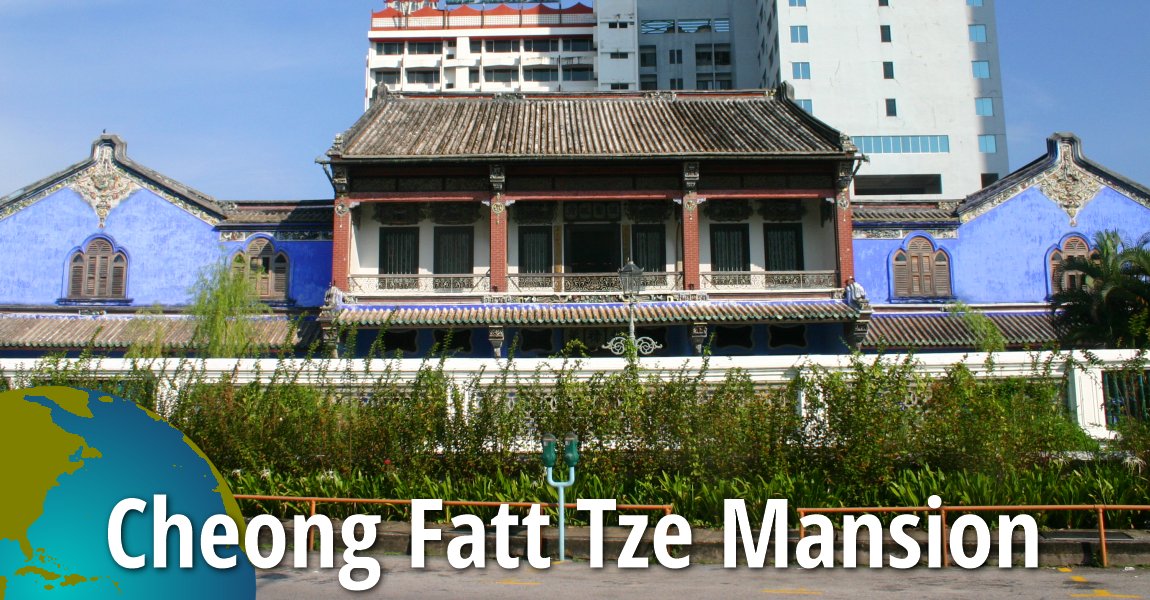 Cheong Fatt Tze Mansion (28 February 2004)
Cheong Fatt Tze Mansion (GPS: 5.421583, 100.334874) is an grand Chinese-style mansion along Leith Street on the buffer zone of the George Town Unesco World Heritage Site. It was built by Cheong Fatt Tze (1840-1916), also known locally as Teow Thiaw Siat, a Chinese of Hakka descent, who was one of the richest men in Southeast Asia.
Accommodation at Cheong Fatt Tze Mansion
Cheong Fatt Tze Mansion today functions as a boutique hotel, called The Blue Mansion by Samadhi. A stay here offers you a glimpse at the opulent lifestyle in the early 20th century.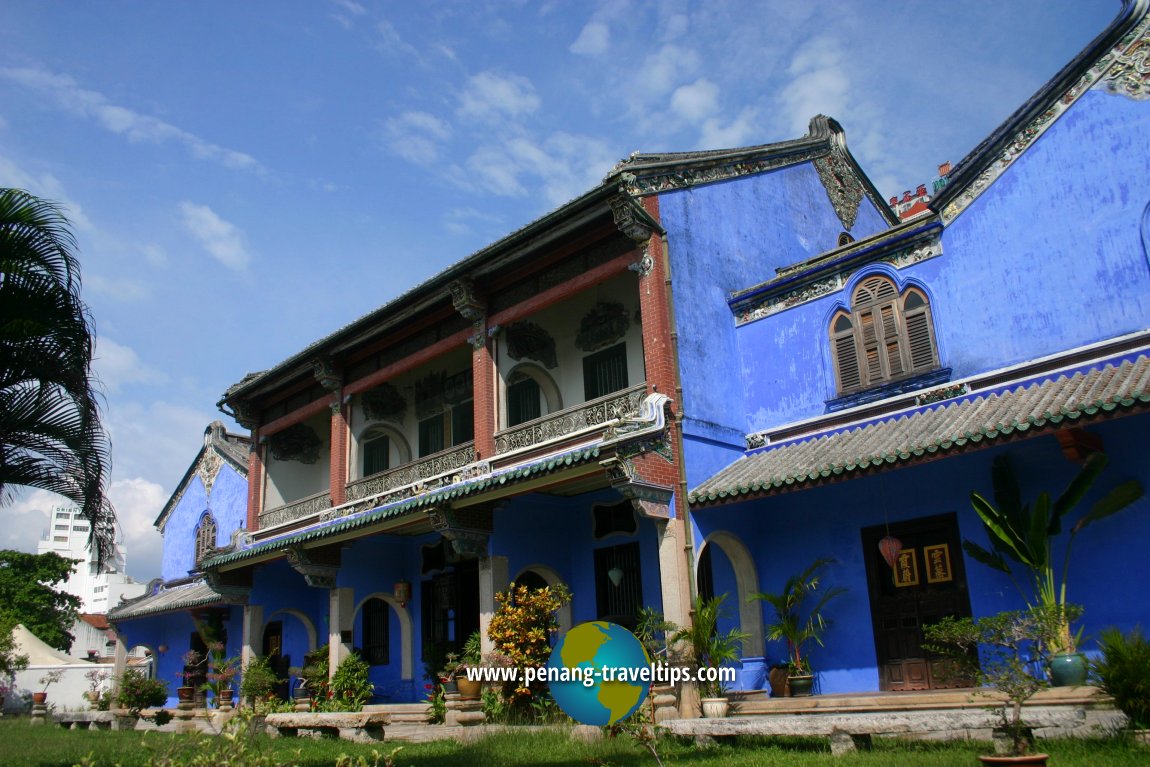 Cheong Fatt Tze Mansion (28 February 2004)
History of Cheong Fatt Tze Mansion
The Cheong Fatt Tze Mansion was built over a period of seven year between 1897 and 1904. It was one of the many houses belonging to Cheong Fatt Tze, whose property stretched from Java to Sumatra, to Penang, Singapore, Hong Kong and China. But of all these properties, this mansion is his favourite residence. All eight of his sons were raised here and received a Western education at the St Xavier's Institution nearby. The house was also the home for his wives No. 3, 6 and 7.Cheong Fatt Tze was a Hakka which formed a minority in Penang but welded enormous economic power. Hakkas controlled much of the property and trades in Penang. To the Hokkiens in Penang, Hakkas were called khek lang, meaning "guest people", because they were the latecomers into the Penang society.
By the late 19th century and early 20th century, the wealthy Hakkas had turned Leith Street into their own upper crust neighborhood. Apart from Cheong Fatt Tze, a number of Hakkas who were his business associates and relatives also had their homes along Leith Street, including his cousin Chang Yu-Nan, Kapitan China of Medan; Cheah Choon Seng, Kapitan China of Acheh; tin-mining tycoon Leong Fe, who was Cheong's son-in law; and Tye Kee Yoon. But while the rest opted for Western-style mansions, Cheong decided on a very traditionally Chinese look for his home and office.
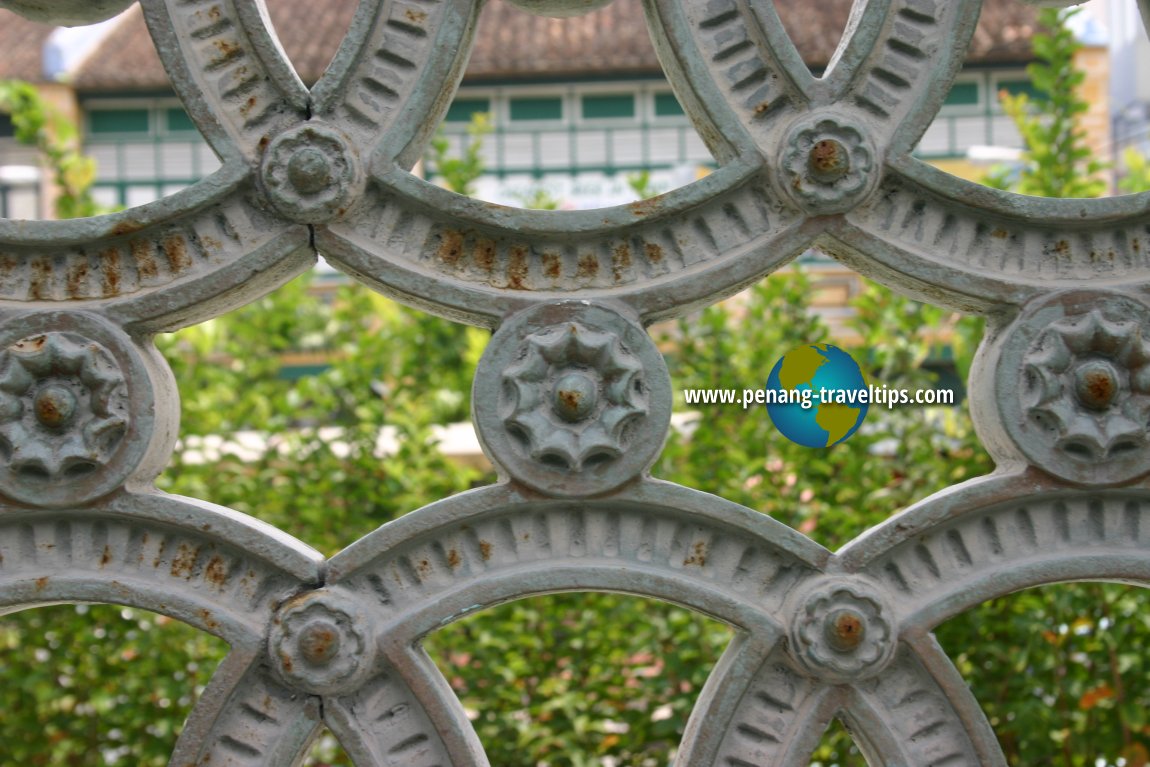
Despite the decidedly Oriental appearance of Cheong Fatt Tze Mansion (a name given to the mansion only upon its reopening after recent restoration), the fixtures and furnishings were a fusion of Oriental and Western architectural concepts. As you explore the mansion, you will find Chinese-style doors, filigree and latticework placed side-by-side to contemporary louvred windows, stained-glass windows, and floor tiles imported from Stoke-on-Trent in Staffordshire, England.
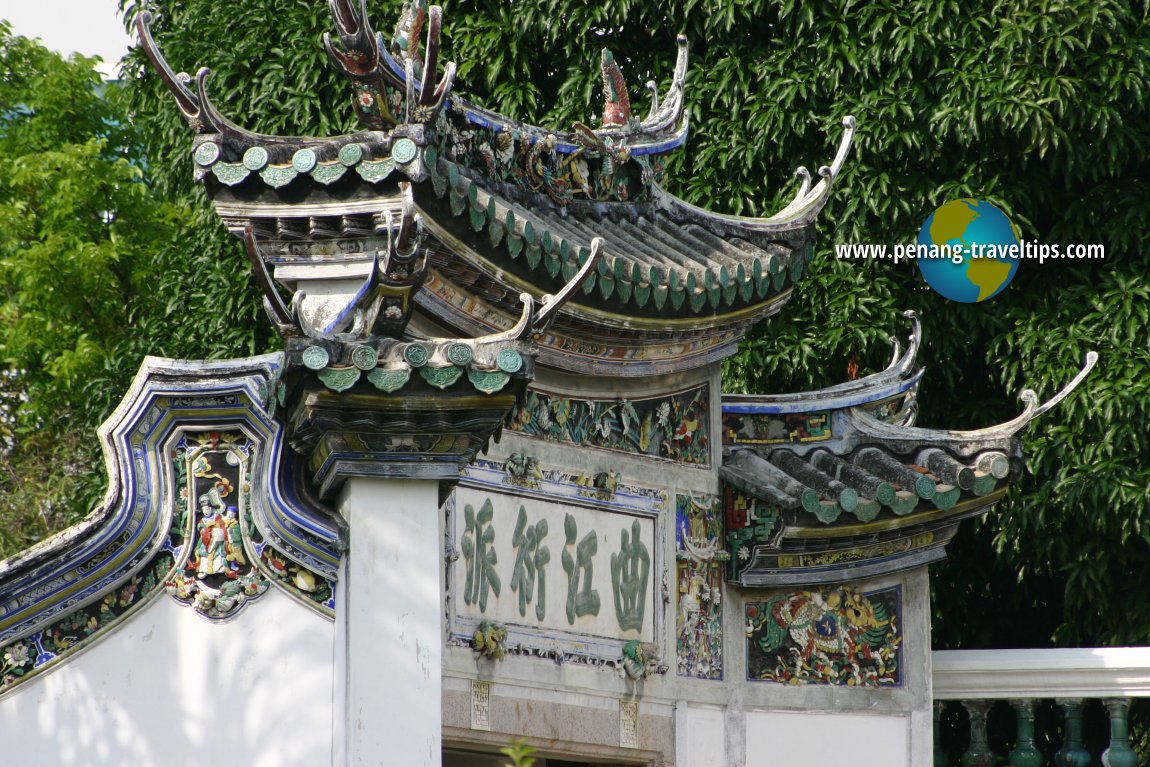 Roof design of the gate of Cheong Fatt Tze Mansion (28 February 2004)
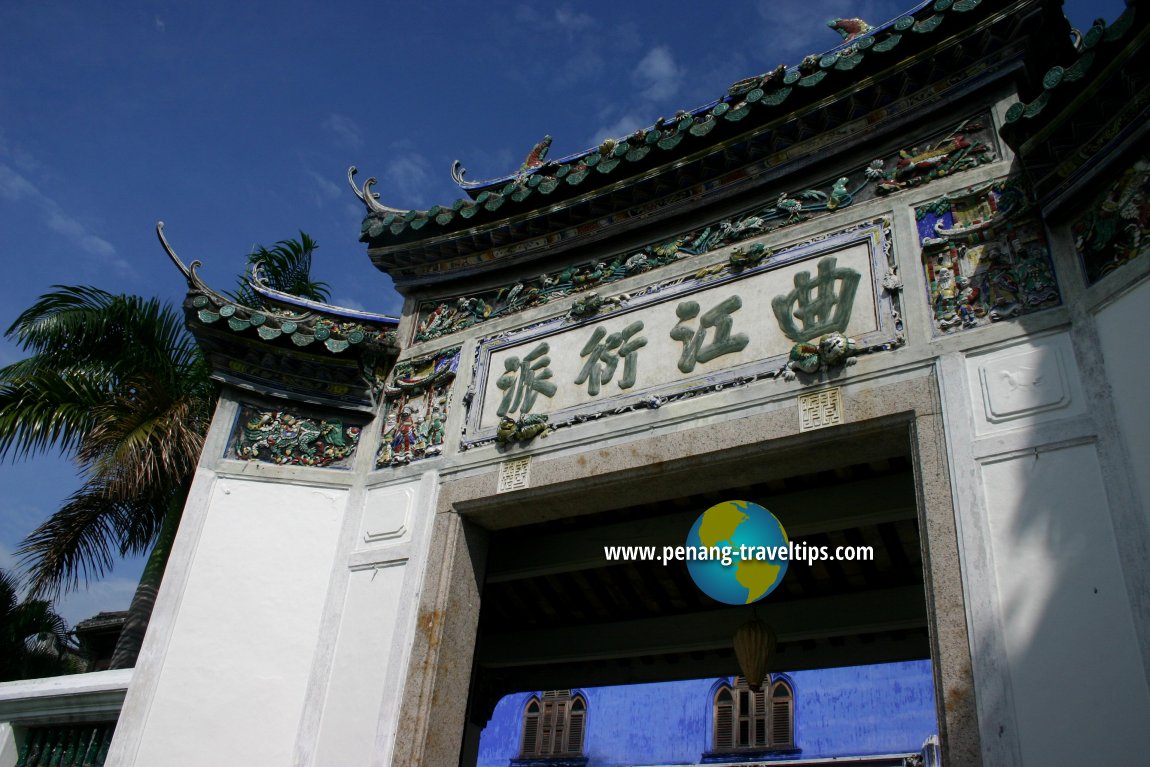 The entrance archway of Cheong Fatt Tze Mansion (28 February 2004)
Cheong Fatt Tze Mansion occupies a land area of 56,000 sqft, with a built-up area totalling 33,000 sqft. In addition to the mansion, Cheong Fatt Tze's residence complex also includes the five terrace houses on the opposite side of Leith Street facing the mansion.
These houses were the living quarters of his maids, gardeners, cooks, stable-boys, grooms, and even the concubines and handmaidens who were out of favor. Occupants of the complex can more or less determine where they stand with the master of the house by how close he stationed you from his centre of power.
 The entrance archway of Cheong Fatt Tze Mansion (28 February 2004)
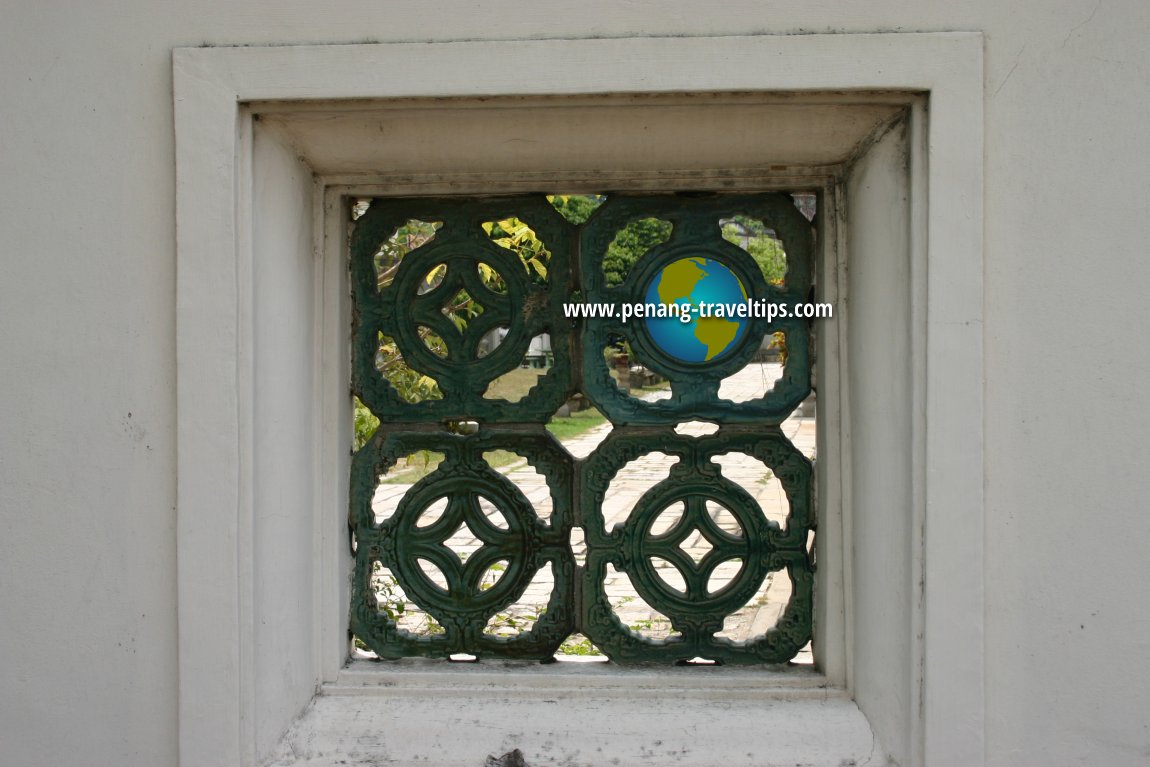 Another coin-motif window on the wall of Cheong Fatt Tze Mansion (28 February 2004)
Cheong Fatt Tze's mansion and the five terrace houses are not aligned to Leith Street. The street had been around much earlier, having been built in the early part of the 19th century, and named after the George Leith, the Lieutenant-Governor of Penang from 1800 to 1803. The reason for the mansion's alignment has to do with Cheong Fatt Tze's belief in feng shui.
Before the house was constructed, a master geomancer would have done the due diligence to find the best placement for it. This includes the direction of the wind, and how water will be channeled as it passed through the house. All this to ensure that every possible step is taken to ensure that the wealth is retained.
Due to the firm observance of feng shui, Cheong Fatt Tze Mansion is fronted by a rhombus-shaped garden. Within the mansion itself, however, everything was symmetrical. The main building was erected first, centred on an inner courtyard which is where, according to geomancy, all the "qhi" or "energy" eminates. The left and right wings of the mansion were only added at a later stage.
Cheong Fatt Tze went to great length to ensure that the mansion remained within his family after his demise. He put together a will that prevented its sale until the last of his many sons had died. He also put aside funds to ensure that the house is properly maintain. Sadly, it was all an exercise in futility.
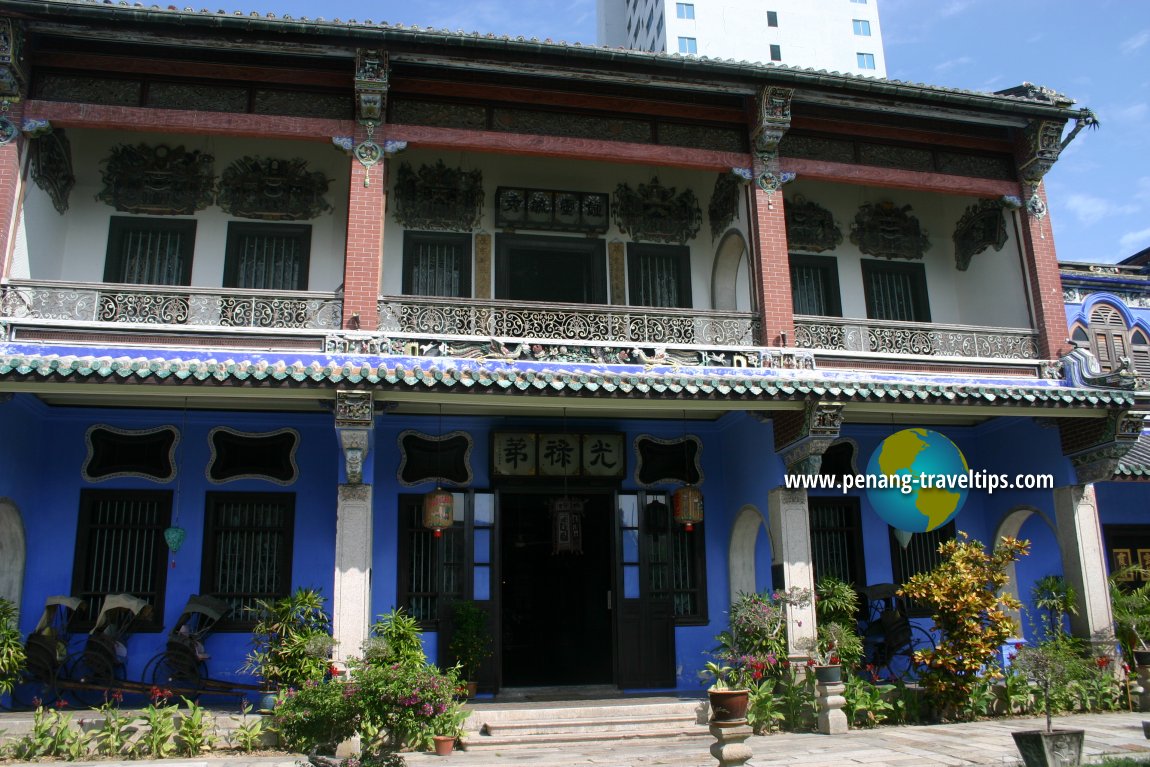 The main building of Cheong Fatt Tze Mansion (28 February 2004)
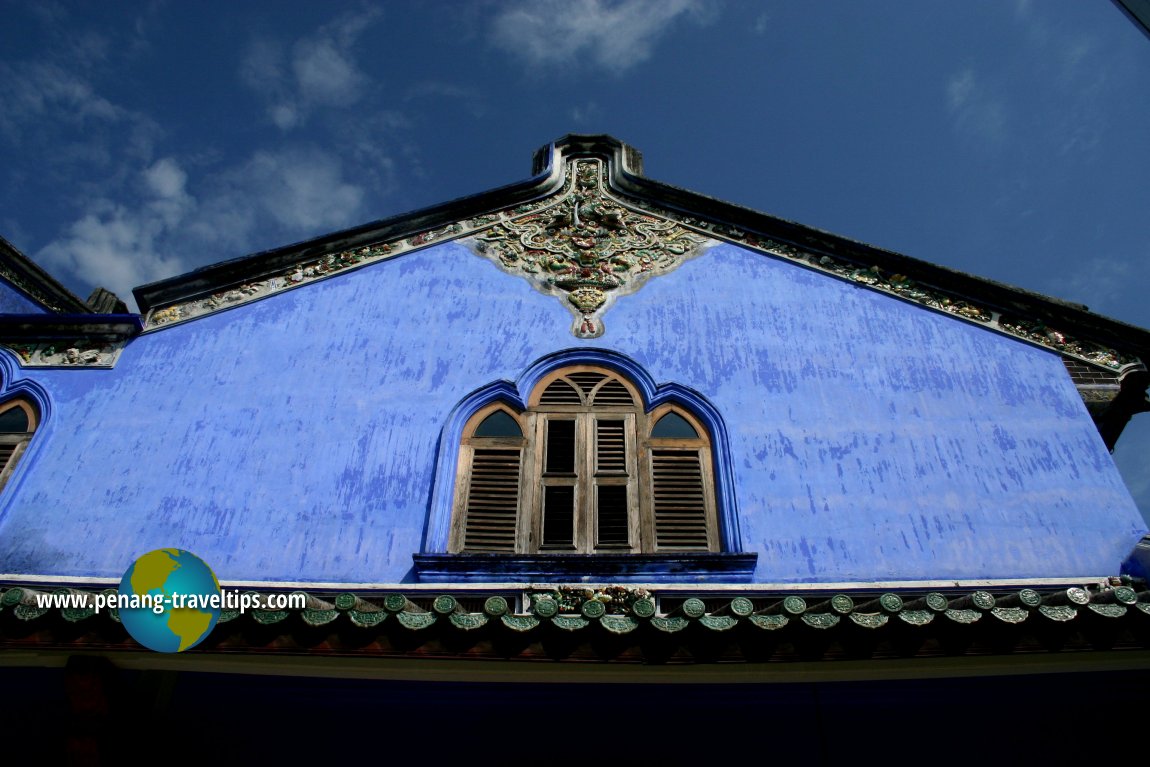 Gable ornamentation at Cheong Fatt Tze Mansion (28 February 2004)
Unlike the Rockefellers, the Cheong clan did not inherit the patriach's financial acumen to maintain his business empire. The money set aside for the maintenance of the mansion were not sufficiently disbursed. Also, it was a fixed amount was did not take inflation into account. Over time, there was never enough money to keep the mansion in proper repair.
Cheong's last daughter-in-law, Thong Siew Mee, lived by her own wits in trying to make ends meet and still upkeep the huge mansion. She was forced to let out rooms, corridor spaces, halls, stores, every inch of the mansion that could earn her rental.
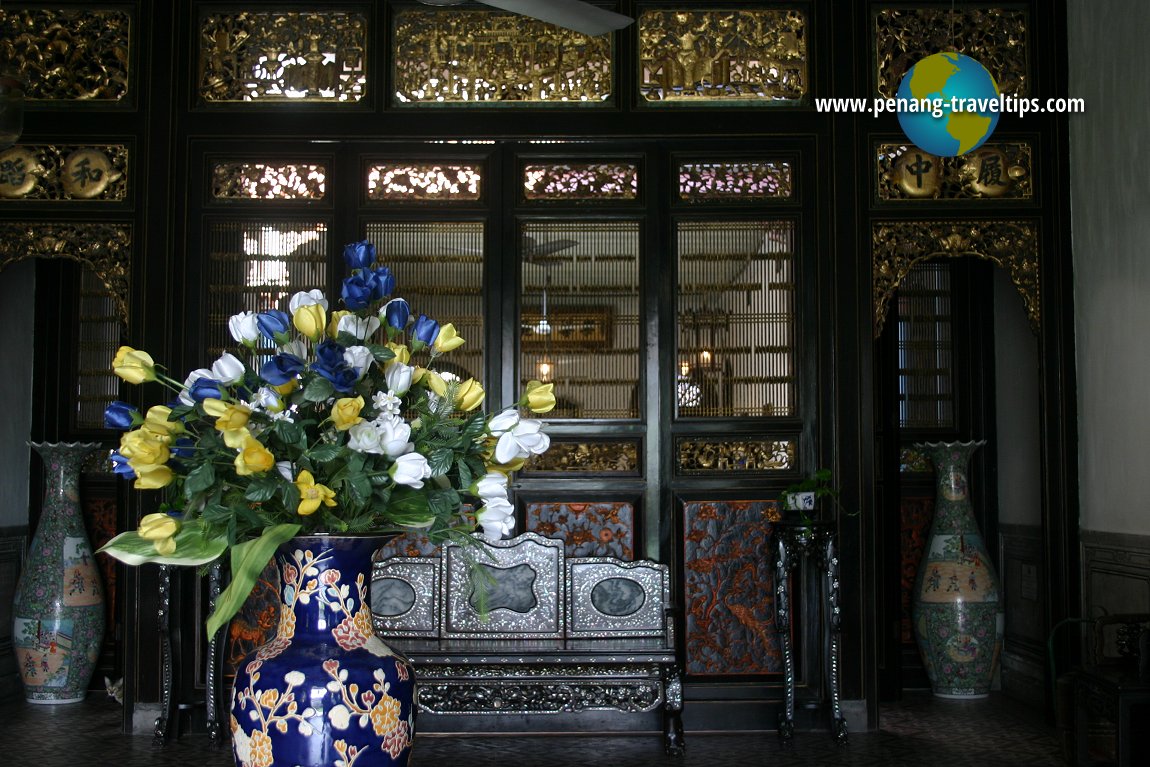 Flower centrepiece in the Reception Hall. (28 February 2004)
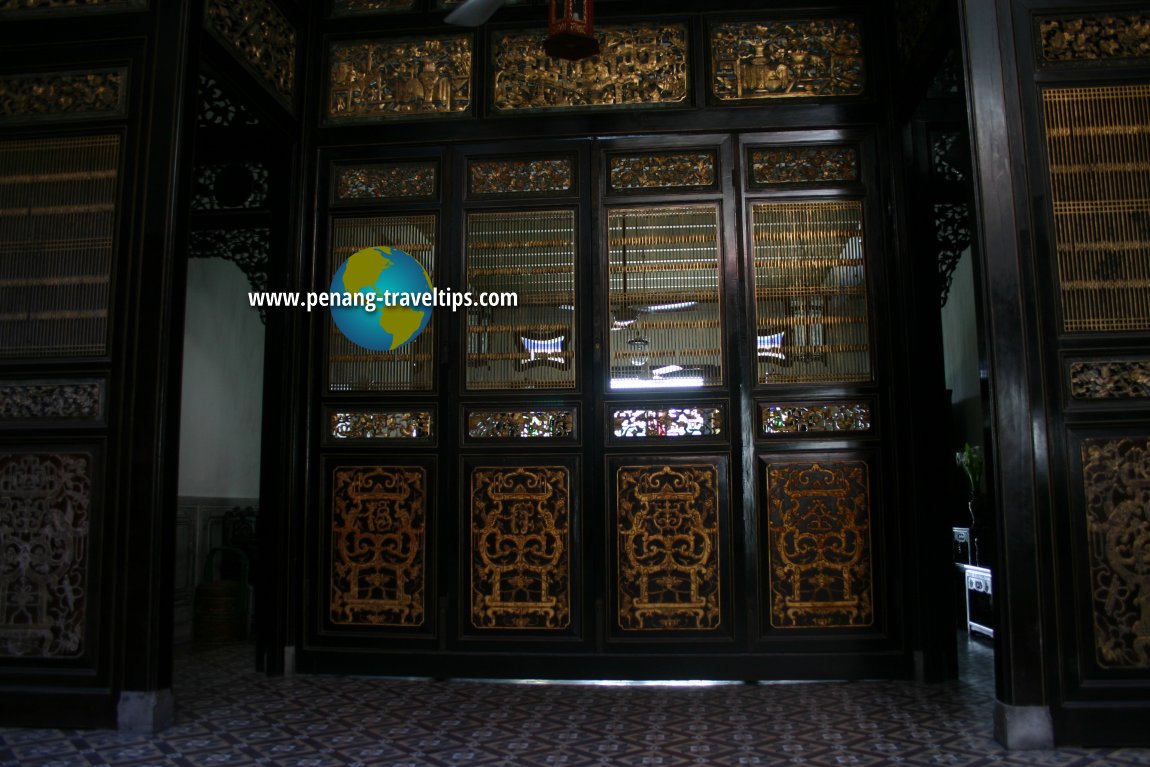 Partition with gilded filigree. (28 February 2004)
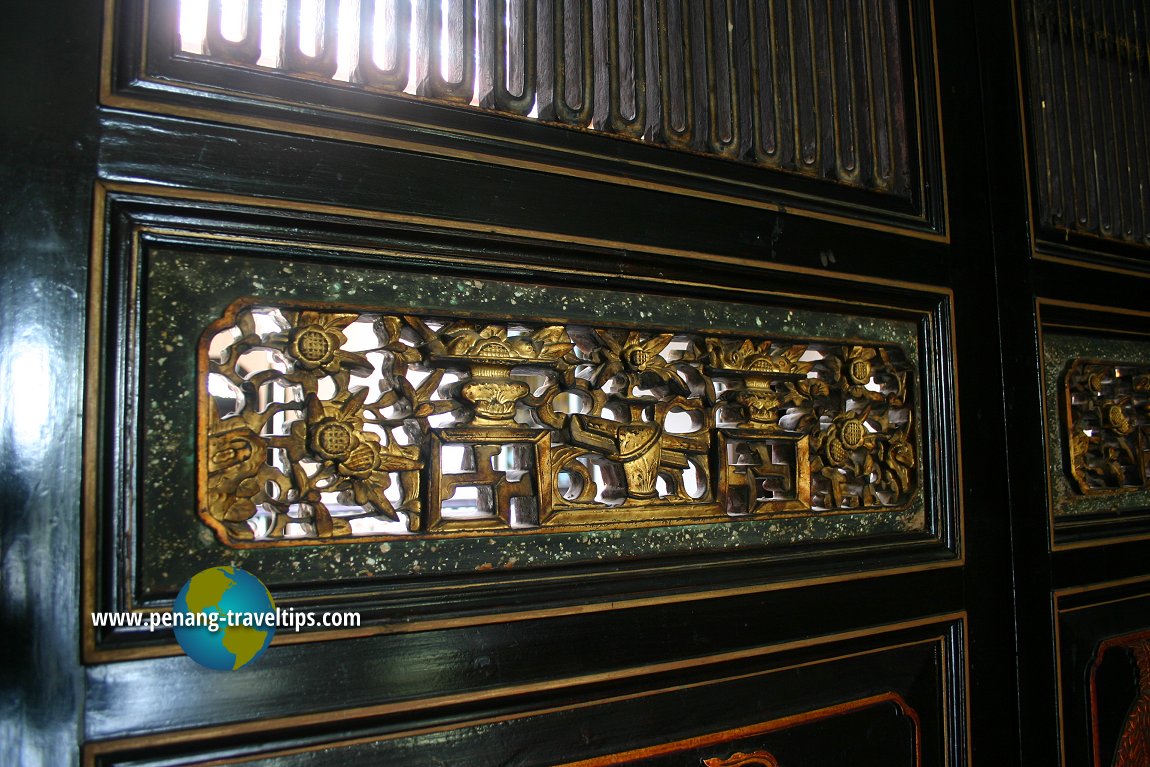 Restored gilded panels. (28 February 2004)
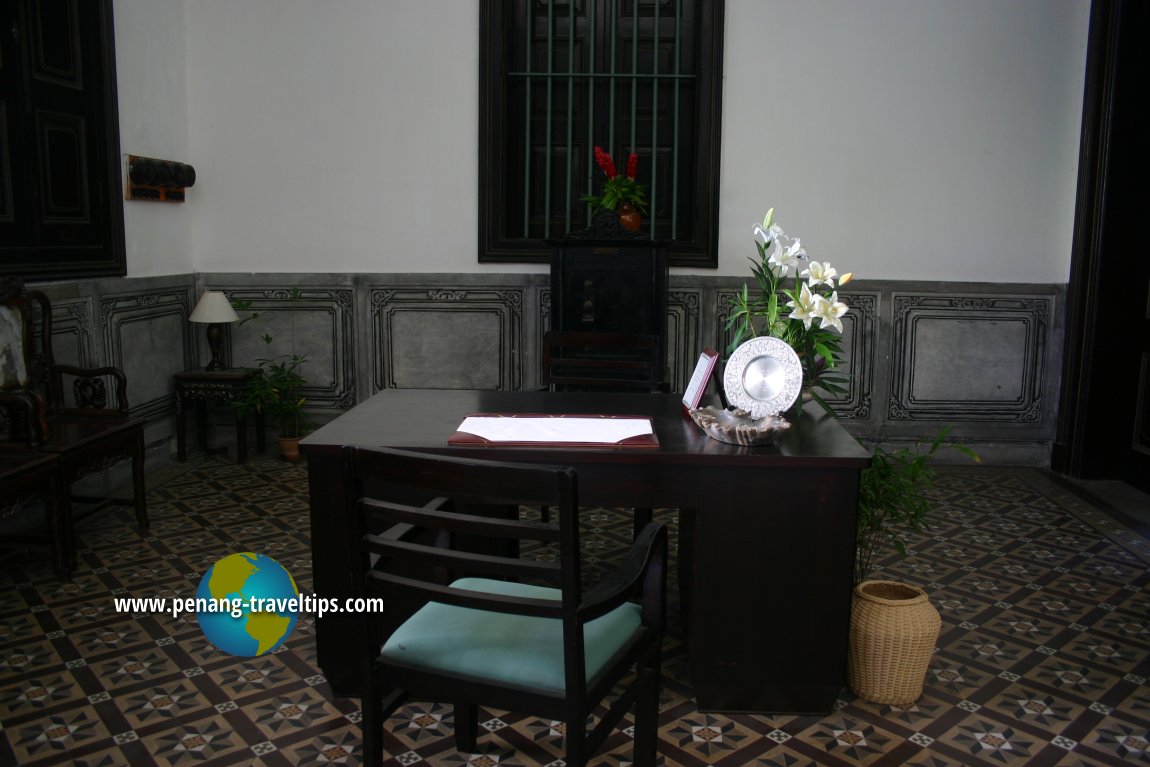 Reception Desk. (28 February 2004)
With the death of the last son, Kam Loong, in 1989, the trust under which the mansion was held was finally terminated, and sad to say, the mansion was put up for sale. Fortunately, a group of local conservationists stepped forward to buy it up, fearing that it would be demolished otherwise.
The mansion was then restored, bit by bit, from top down, employing techniques that are sympathetic to the traditional methods in which the mansion was first constructed. As the conservationists peeled away the years of neglect, they made startling discoveries about the mansion and the secrets of its workmanship.

Winner of the 2000 Award of Excellence
Unesco Asia-Pacific for Culture Heritage Conservation.
Restoration work on Cheong Fatt Tze Mansion begain in 1991, and was completed in 1995. The restoration project was documented and submitted to Unesco Asia-Pacific, which awarded it the "Most Excellent Project" award for cultural heritage conservation.
Today, the mansion is given the name "Cheong Fatt Tze Mansion", after its founder. It has been readapted as a boutique hotel. It is one of the few private residences of its kind outside of China, and is one of the two by the Cheong Fatt Tze clan. In Medan, Indonesia, stands a similar mansion by Cheong Fatt Tze's nephew, Tjong A Fie, who is also an imminent personality there. The Tjong A Fie Mansion is also a tourist attraction in Medan.
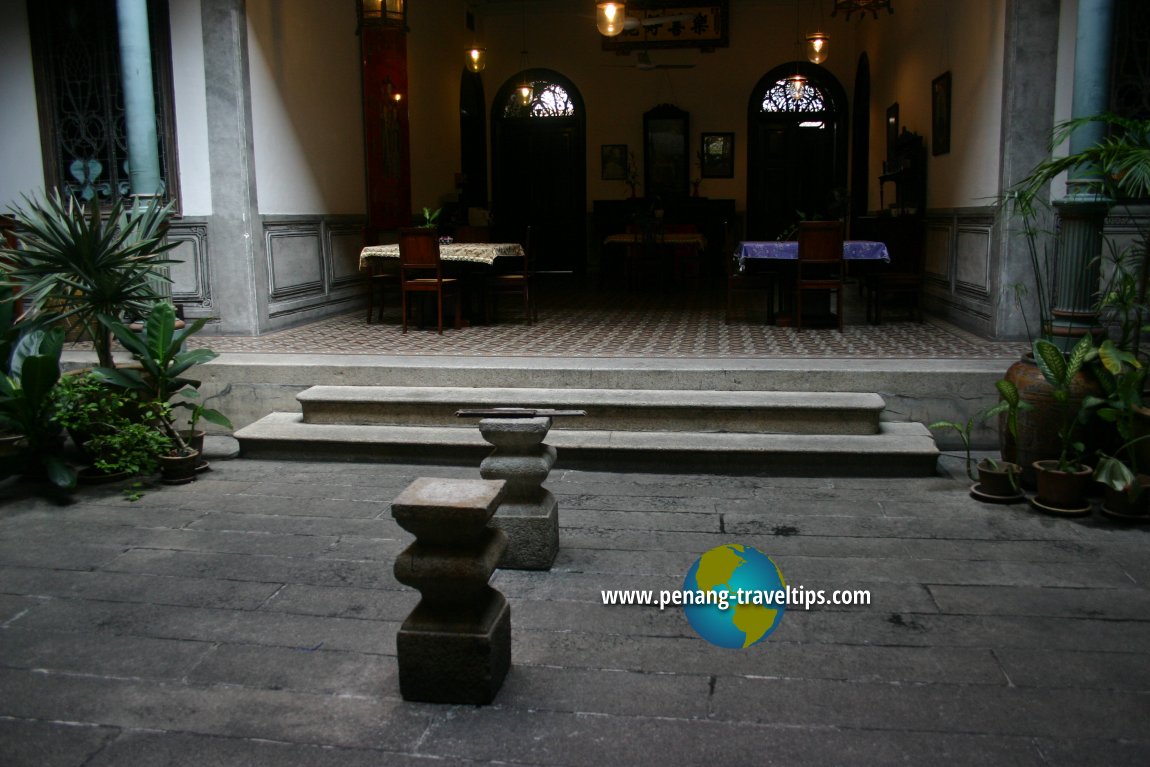 Reception Desk. (28 February 2004)
Contact
Cheong Fatt Tze Mansion14 Leith Street
10200 George Town, Penang
Phone: +60-4-262 0006
Going to Cheong Fatt Tze Mansion
Cheong Fatt Tze Mansion is located along Leith Street, at the junction with Farquhar Street. The nearest bus stop is along Penang Road (see map below). Depending on your direction of travel, you can take Rapid Penang bus 103, 204, 502 and CAT. From the bus stop, north up Penang Road until intersection with Farquhar Street, turn right, follow Farquhar Street till junction with Leith Street, and you will see entrance to Cheong Fatt Tze Mansion on your right. Cheong Fatt Tze Mansion is also one of the stops for the Penang Hop-On Hop-Off Tourist Bus.Cheong Fatt Tze Mansion is  on the map of Leith Street
What to See
- The ornamental entrance archway,
- The decoration on the roof and walls made of tiny pieces of broken pottery called chien nien
- Admire the exterior blue wall finishes made from indigo lime wash
- Inside the mansion, view the trompe l'œil painting on the interior dado.
- Art Nouveau stained glass windows
Nearby Sights
- Hainan Temple
- St Francis Xavier Church
- Eastern & Oriental Hotel
- St Xavier's Institution
- Convent Light Street
- Church of the Assumption
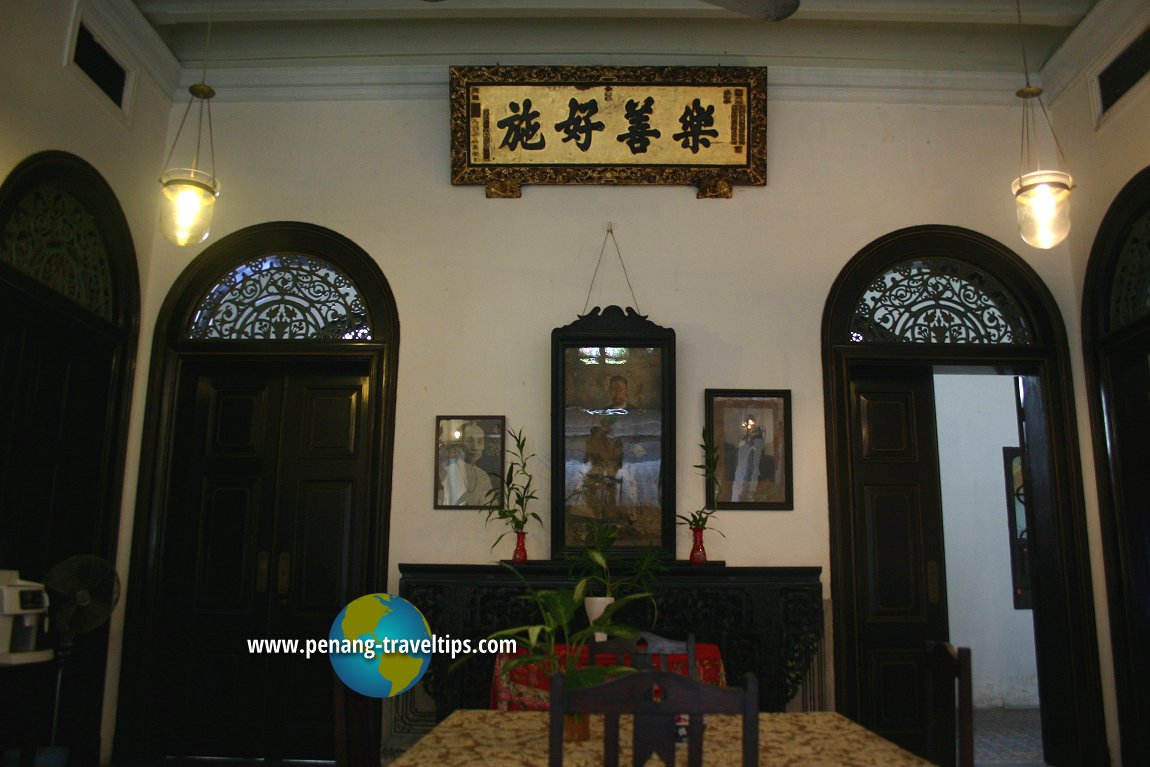 Dining room. (28 February 2004)
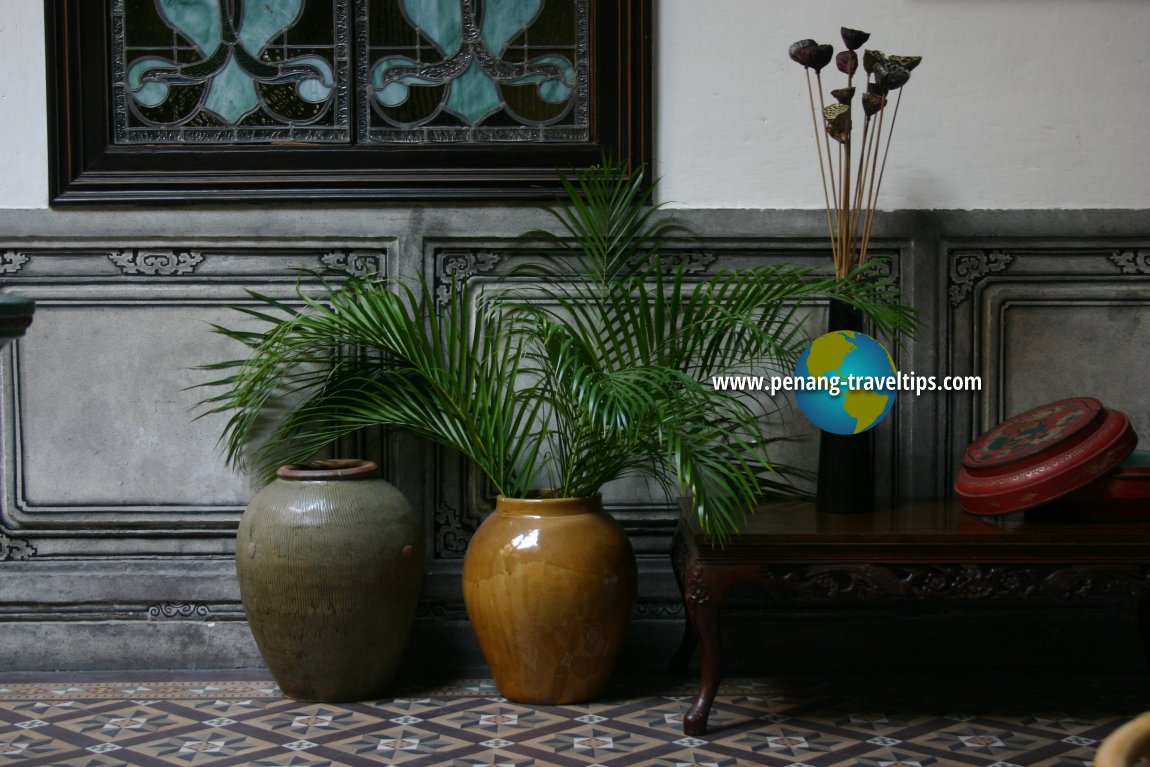 Potted plants in front of Trompe-l'œil wall ornamentation. (28 February 2004)
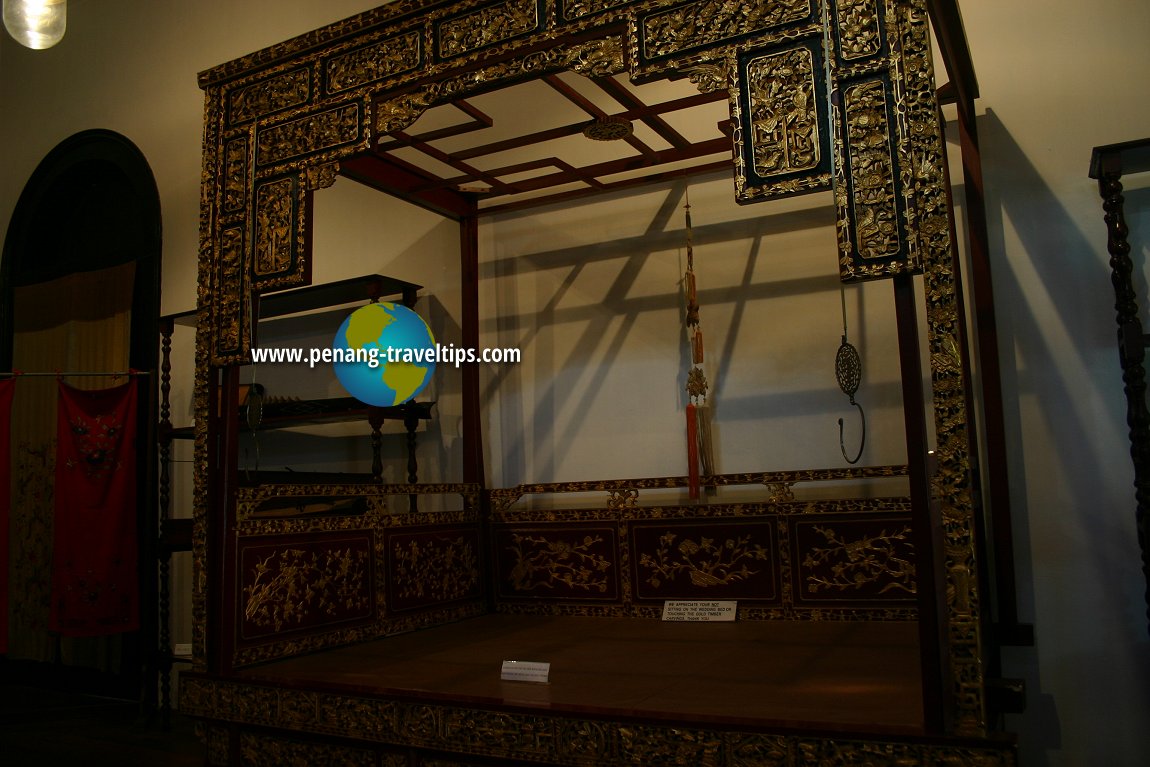 Antique bed. (28 February 2004)
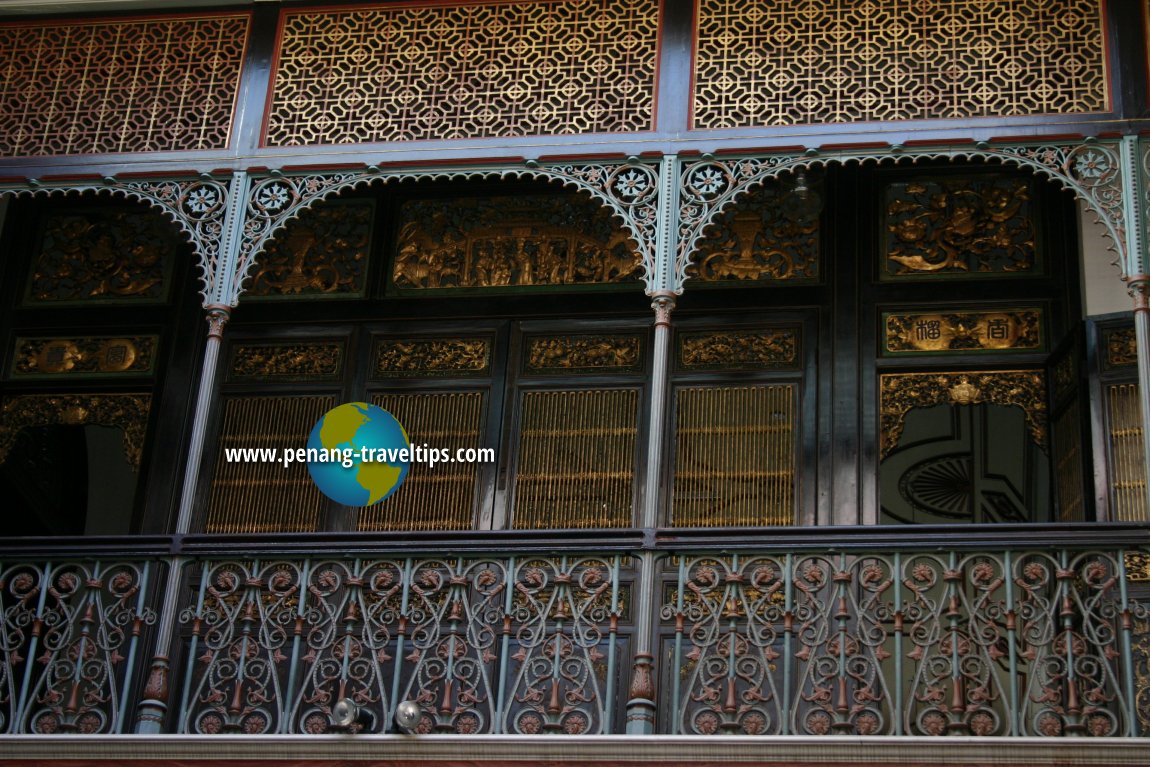 Cast-iron columns, originally manufactured by MacFarlanes in Glasgow, Scotland. (28 February 2004)
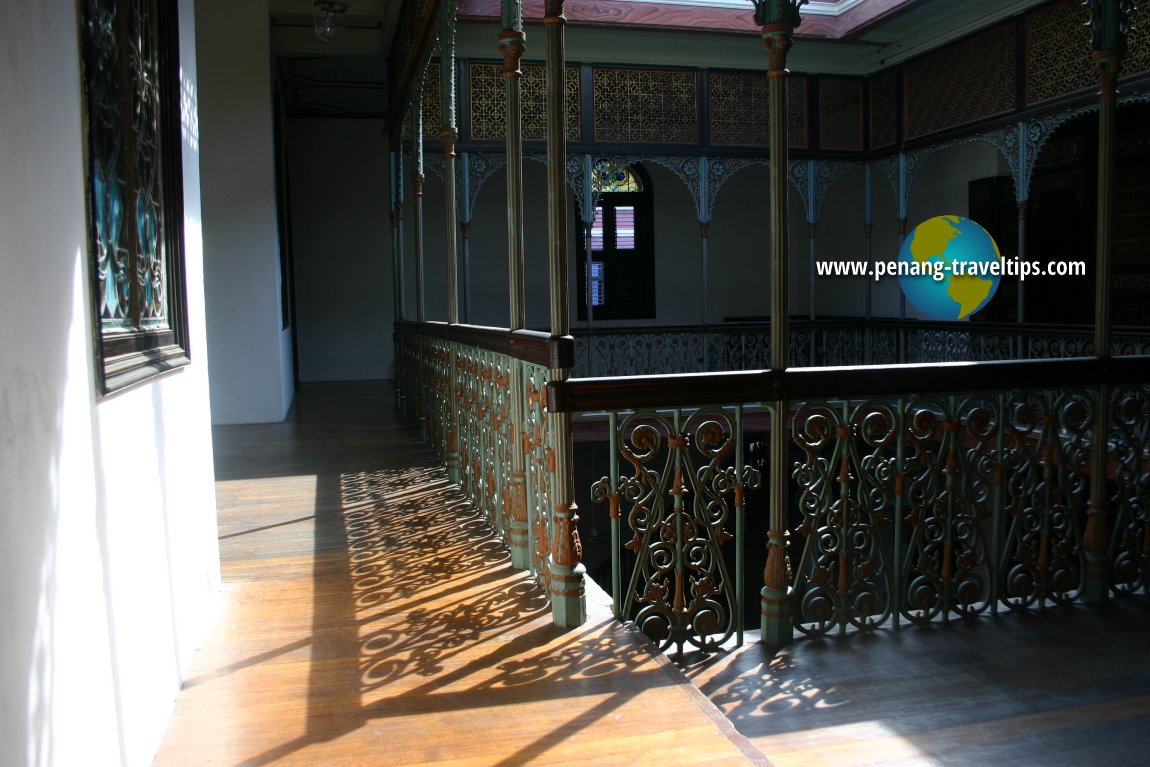 The cast-iron columns in the morning sun. (28 February 2004)
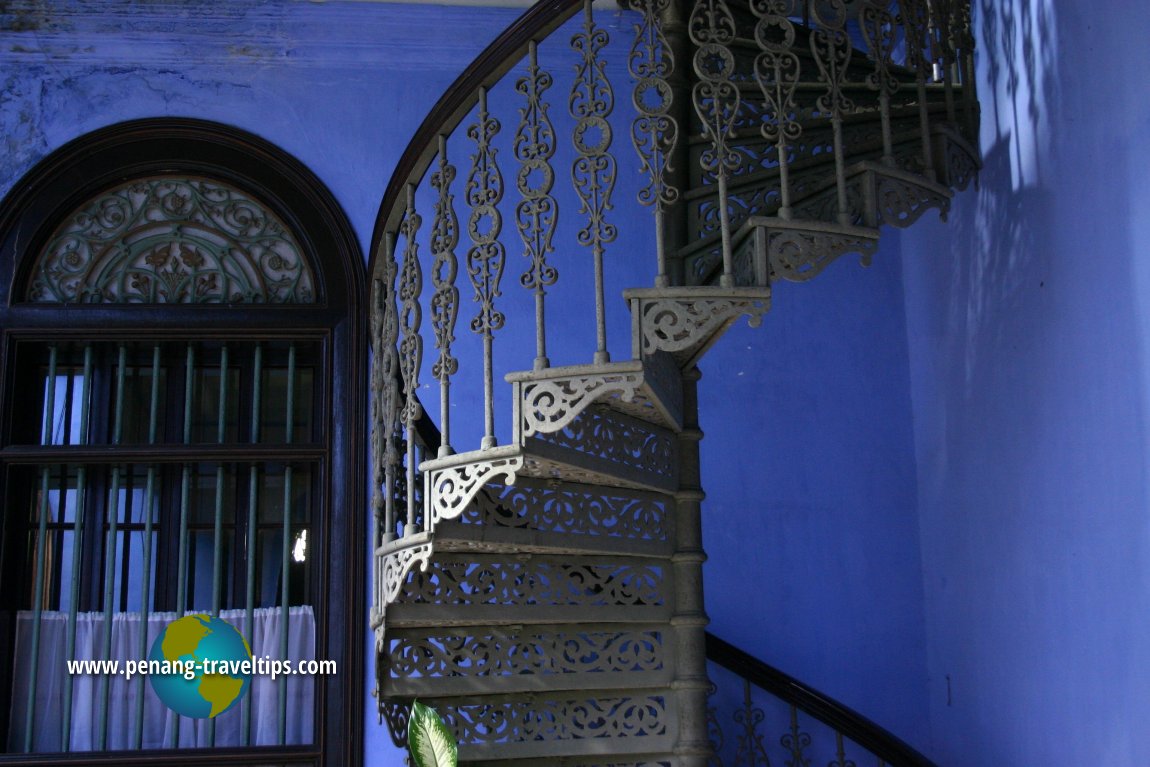 Cast-iron spiral staircase. (28 February 2004)
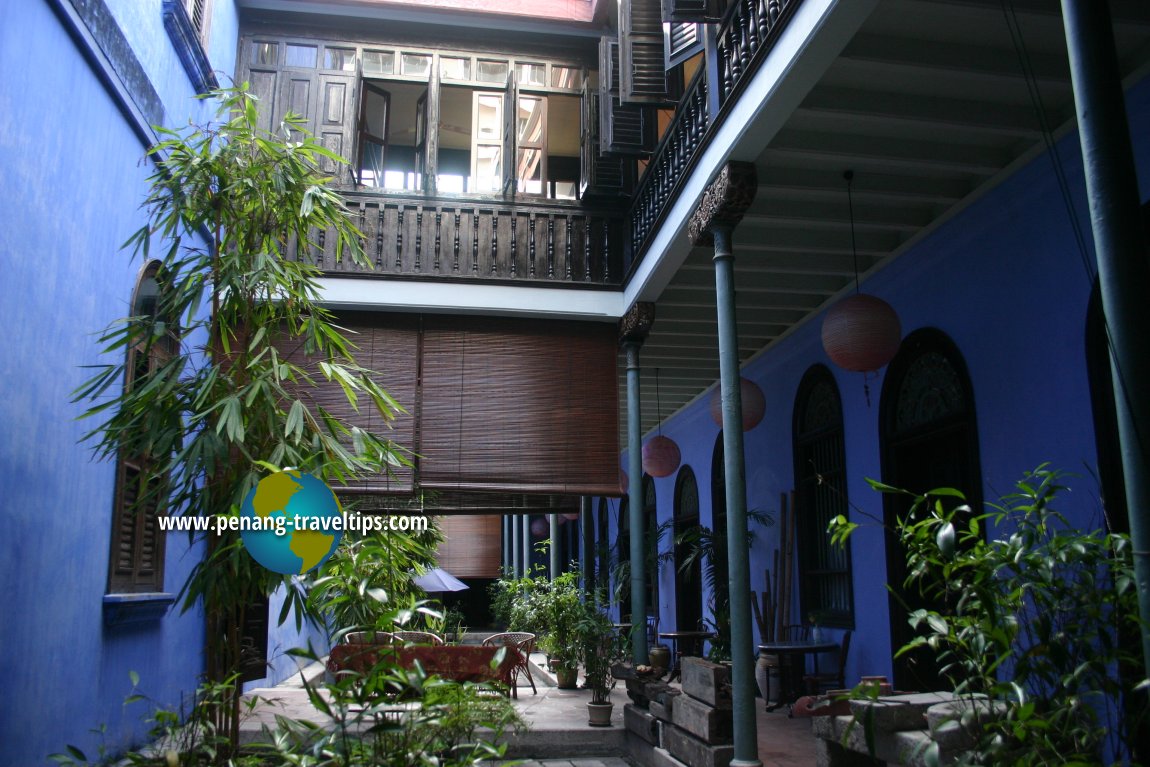 Side courtyard. (28 February 2004)
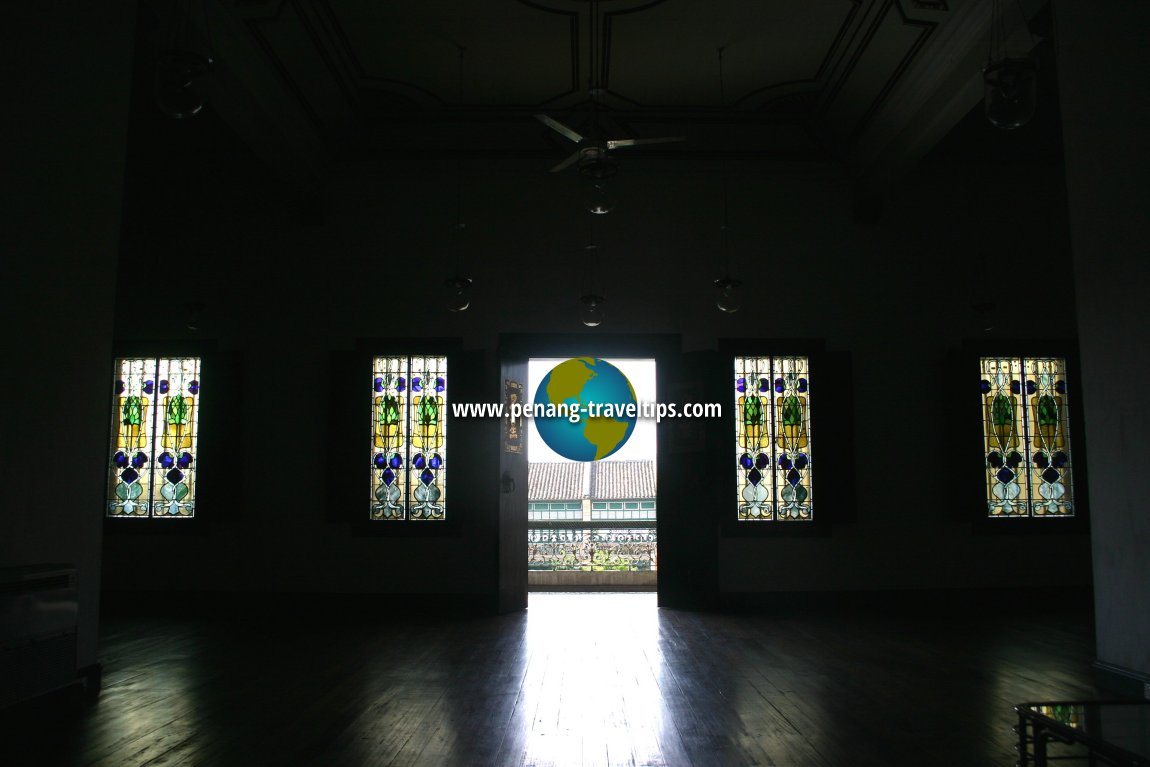 Main hall upstairs. (28 February 2004)
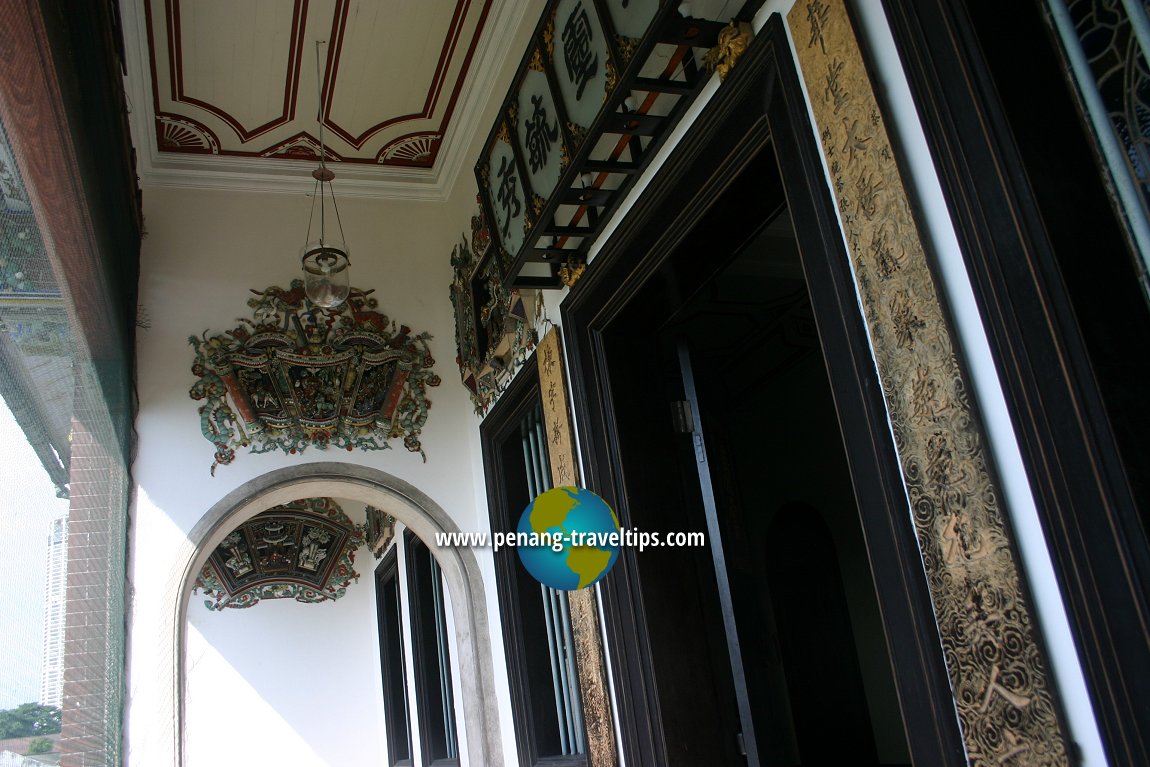 Ornamentation at the balcony. (28 February 2004)
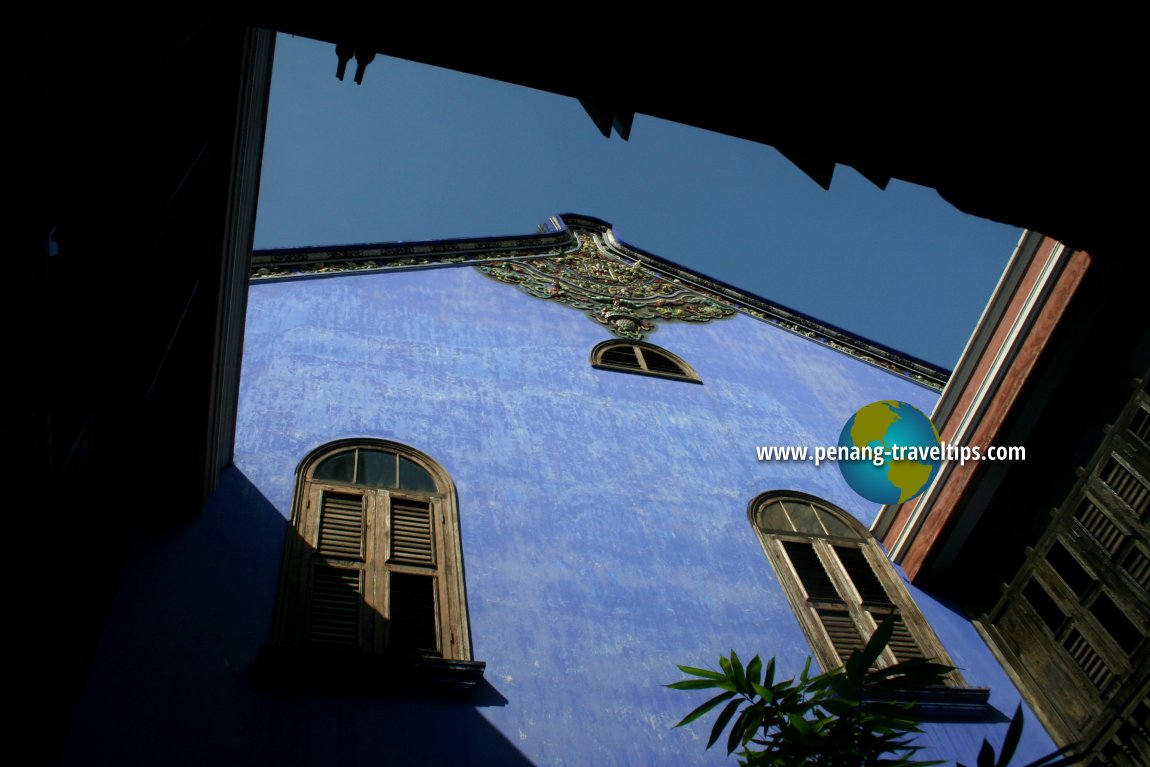 View from side courtyard. (28 February 2004)
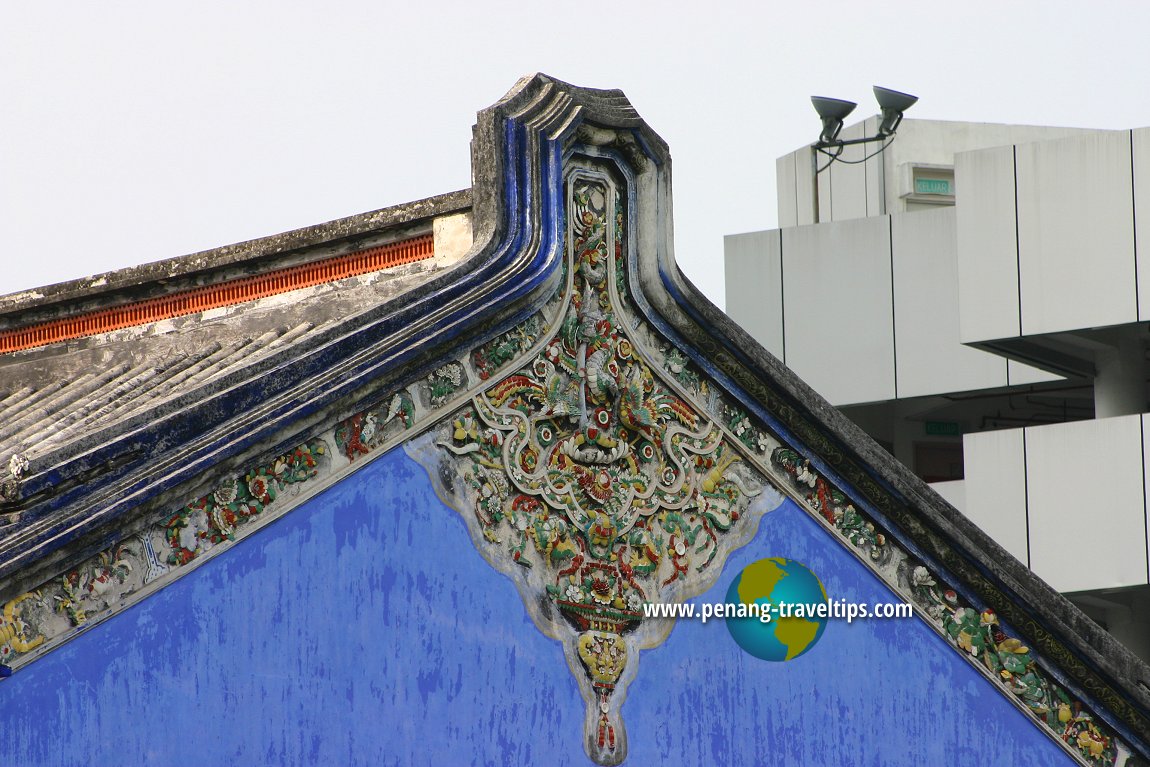 Details of the gable ornamentation. (28 February 2004)
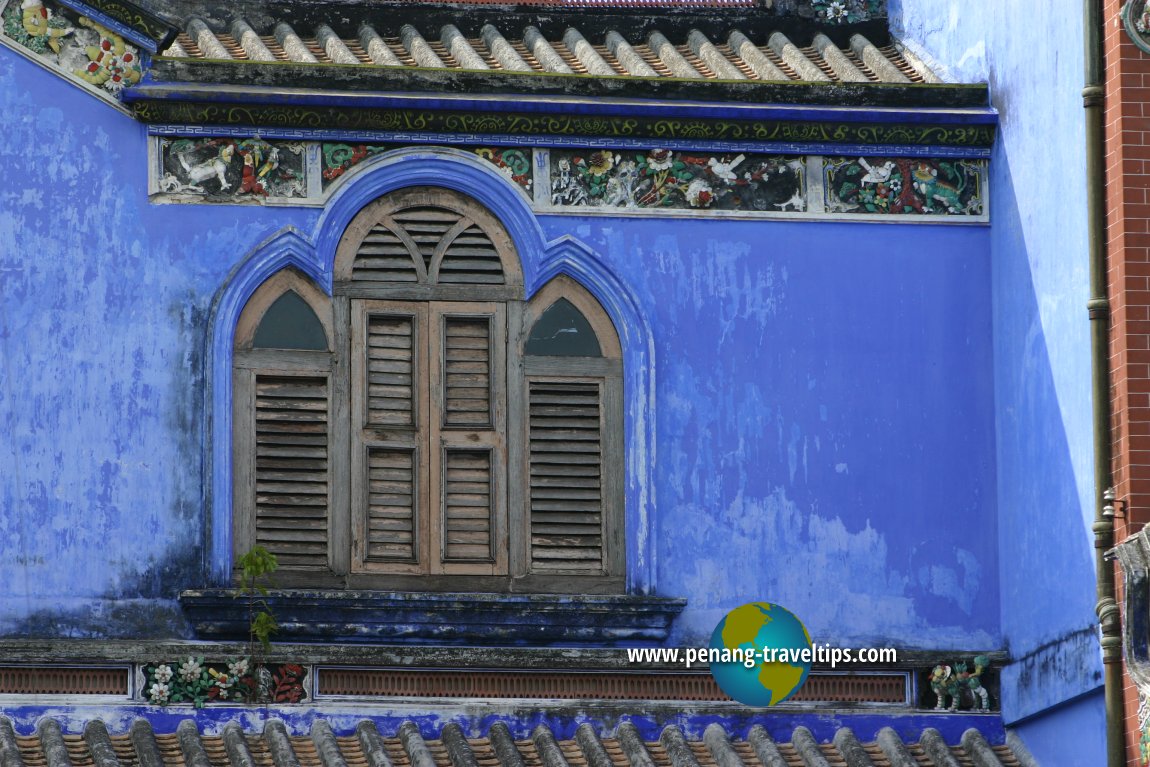 Louvre wooden shutters at the windows. (28 February 2004)
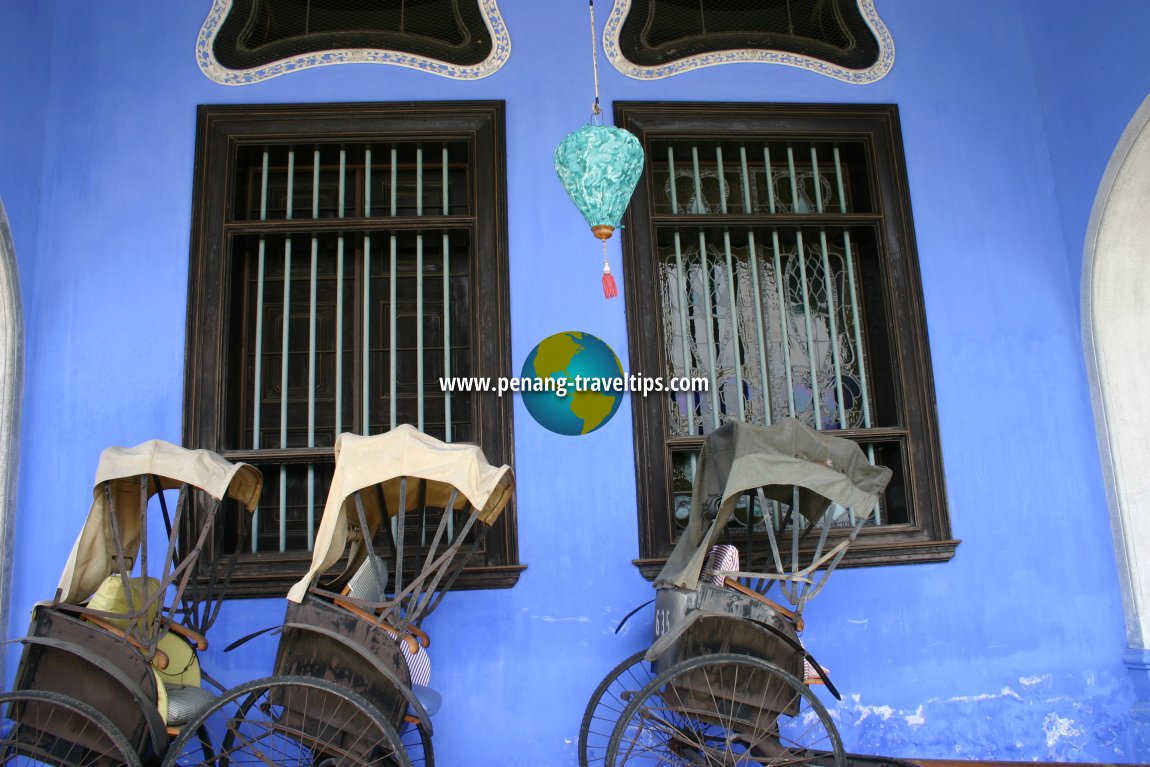 Antique rickshaws. (28 February 2004)Here I am with Miss Loh Lim Lin Lee, with participants of the AsiaExplorers Site Visit. (28 February 2004)
Acknowledgement
Penang Travel Tips expresses its thanks to Loh-Lim Lin Lee for her assistance in the preparing of the material for this article. Special thanks also to Cheong Fatt Tze Mansion for allowing the photo shoot of its interior.List of Penang Tourist Attractions; List of Hotels in Penang and Hotels in Malaysia
 Buy, rent or sell properties in Penang
Do you have a property for sale or to rent out? Are you looking to buy or rent a property? Get in touch with me. WhatsApp me (Timothy Tye) at 012 429 9844, and I will assign one of my property agents to serve you. I will choose the agent for you, according to your property needs. So when you message me, provide me some details of what you need, whether to sell, to buy, to rent or to rent out, and what type of property, is it condo, apartment, house, shop, office or land.Adakah anda mempunyai hartanah untuk dijual atau disewakan? Adakah anda ingin membeli atau menyewa hartanah? Hubungi saya. WhatsApp saya (Timothy Tye) di 012 429 9844, dan saya akan menugaskan salah seorang ejen hartanah saya untuk berkhidmat kepada anda. Saya akan pilih ejen untuk anda, mengikut keperluan hartanah anda. Oleh itu, apabila anda menghantar mesej kepada saya, berikan saya beberapa butiran tentang apa yang anda perlukan, sama ada untuk menjual, untuk membeli, untuk disewakan atau untuk disewakan, dan jenis hartanah apakah itu kondo, pangsapuri, rumah, kedai, pejabat atau tanah.
您有待出售或出租的房产吗? 您想购买或租赁房产吗? 与我联系。 WhatsApp 我 (Timothy Tye) 012 429 9844,我将指派一名房地产经纪人为您服务。 我会根据您的房产需求,为您选择代理。 因此,当您给我发消息时,请向我提供一些您需要的详细信息,无论是出售、购买、出租还是出租,以及房产类型,是公寓、公寓、房屋、商店、办公室还是土地。
New Properties in Penang
Looking to buy property in Penang? Get the e-brochures right here without having to visit or contact individual developers.- Anggun Residences E-Brochure, Batu Kawan
- Aston Acacia E-Brochure, Bukit Mertajam
- Beacon Executive Suites E-Brochure, George Town
- Beverly Heights @ Bukit Gambir E-Brochure, Gelugor
- BM Highland E-Brochure, Bukit Mertajam
- Cypress Villa E-Brochure, Sungai Ara
- D'Zone Condominium E-Brochure, Teluk Kumbar
- Elements Garden E-Brochure, Butterworth
- Ferringhi Residence 2 E-Brochure, Batu Ferringhi
- GEM Residences E-Brochure, Prai
- Golden Triangle 2 E-Brochure, Sungai Ara/Relau
- Grace Residence E-Brochure, Jelutong
- Granito @ Permai E-Brochure, Tanjong Bungah
- Green City Residence E-Brochure, Jelutong
- Havana Beach Residences E-Brochure, Bayan Lepas
- Imperial Residences E-Brochure, Sungai Ara/Relau
- Imperial Grande E-Brochure, Sungai Ara/Relau
- Lucerne Residence E-Brochure, Bayan Lepas
- Mezzo @ The Light City E-Brochure, Gelugor
- Middleton E-Brochure, Gelugor
- Orchard Villa 3 E-Brochure, Simpang Ampat
- Primero Heights E-Brochure, Permatang Pauh
- Queens Waterfront Q2 E-Brochure, Bayan Lepas
- Royale Heights @ Tambun Royale City E-Brochure, Simpang Ampat
- Royale Infinity @ Tambun Royale City E-Brochure, Simpang Ampat
- Rubica @ Harbour Place E-Brochure, Butterworth
- Sensasi Commercial Suites E-Brochure, Batu Kawan
- Setia Sky Ville E-Brochure, Jelutong
- Setia Sky Vista E-Brochure, Sungai Ara/Relau
- Setia V Residence E-Brochure, Gurney Drive
- Sinaran Residence E-Brochure, Batu Kawan
- Sky @ TriPark E-Brochure, Bukit Mertajam
- Skyridge Garden E-Brochure, Tanjong Tokong
- Starhill Luxury Residences E-Brochure, Gelugor
- Straits Residences E-Brochure, Tanjong Tokong
- Taman Nuri Emas E-Brochure, Nibong Tebal
- The Light Collection IV E-Brochure, Gelugor
- The Loft @ Southbay E-Brochure, Batu Maung
- The Terraces Condominium E-Brochure, Bukit Jambul
- Trehaus Condo Villas E-Brochure, Bukit Jambul
- Triuni Residences E-Brochure, Batu Uban
- Urban Suites E-Brochure, Tanjong Tokong
- Valencia Residence E-Brochure, Bayan Lepas
- Vertu Resort E-Brochure, Batu Kawan
- Vivo Executive Apartment E-Brochure, Batu Kawan
- Viluxe E-Brochure, Batu Kawan
- Waterside Residence E-Brochure, Gelugor
Latest updates on Penang Travel Tips
Discover with Timothy YouTube Channel
PG Food Channel
Learn Penang Hokkien YouTube Channel
SojiMart Videos
Share your travels and/or ask a travel-related question
Join the Penang Travel Tips Facebook Group to share photos, tips and anything related to your travels, or ask travel-related questions.
 Map of Roads in Penang
Looking for information on Penang? Use this Map of Roads in Penang to zoom in on information about Penang, brought to you road by road. Discover with Timothy
Let me take you to explore and discover Penang through my series of walking tours on YouTube. You may use these videos as your virtual tour guide. At the beginning of each video, I provide the starting point coordinates which you may key into your GPS, Google Maps or Waze, to be navigated to where I start the walk, and use the video as your virtual tour guide.Disclaimer
Please use the information on this page as guidance only. The author endeavours to update the information on this page from time to time, but regrets any inaccuracies if there be any.Latest from Discover with Timothy: Gurney Bay - what to see and do there
About this website

Hello and thanks for reading this page. My name is Timothy and my hobby is in describing places so that I can share the information with the general public. My website has become the go to site for a lot of people including students, teachers, journalists, etc. whenever they seek information on places, particularly those in Malaysia and Singapore. I have been doing this since 5 January 2003, for over twenty years already. You can read about me at Discover Timothy. By now I have compiled information on thousands of places, mostly in Peninsular Malaysia and Singapore, and I continue to add more almost every day. My goal is to describe every street in every town in Malaysia and Singapore.
Robbie's Roadmap
- Episode 1: Robbie's Journey to Financial Freedom
- Episode 2: Lost in America
- Episode 3: The Value of Money
- Episode 4: The Mentor
- Episode 5: The Thing that Makes Money
- Episode 6: The walk with a Billionaire
- Episode 7: The Financial Freedom Awakening
- Episode 8: Meet Mr Washington
- Episode 9: The Pizzeria Incident
Copyright © 2003-2024 Timothy Tye. All Rights Reserved.