

Cheng Kon Sze Temple (Cheng Ji Chan, Temple of a Thousand and Two Steps)
 Go Back - Latest PENANG Sights/Streets/New Properties > Malaysia > World | Hokkien : Lessons : Dictionary | YouTube | Facebook | About Me : Contact Me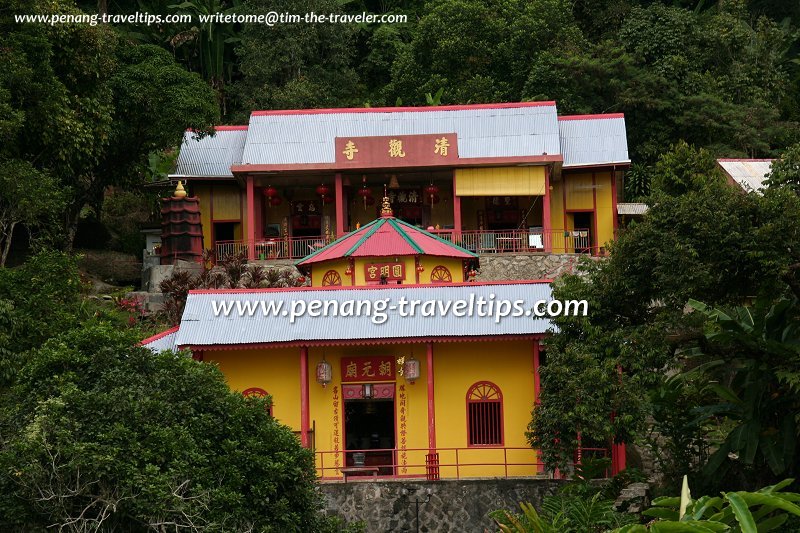
The three halls of Cheng Kon Sze (11 October 2008)

Cheng Kon Sze Temple, or popularly known as Cheng Ji Chan, is a sprawling Taoist temple complex anchored on the slopes of the central hills of Penang. In the new Penang Hokkien writing system, it is spelled Cheng33 Jee33 Can3
 . Its official full name is Thien Hen San Chau Yuen Tong Cheng Kon Sze, meaning Cheng Kon Temple of Chau Yen Cave of Thien Hen Mountain. Thien Hen San could well mean Bukit Penara, the hill located between the temple and the Ayer Itam Dam.
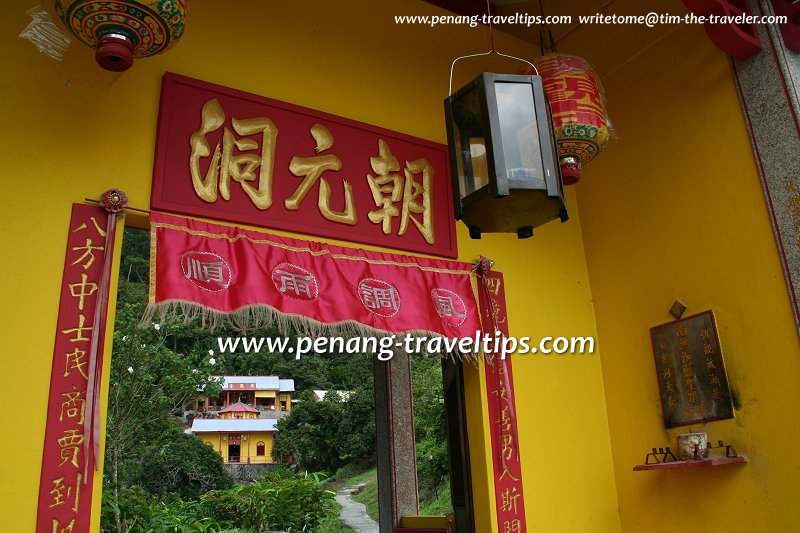 View of Cheng Kon Sze from Chau Yuen Tong Archway (11 October 2008)
The name Cheng Ji Chan is often translated in English as Temple of A Thousand Two Hundred Steps. Actually, it means the Temple of A Thousand and Two Steps, but somehow somewhere, the meaning of "two" was mistaken for "two hundred". (The difference does matter: it's a tedious climb anyway!) An even more seismic shift in meaning comes among some punters who thought Cheng Ji Chan actually means Temple of Four Digit Numbers. (You can have some fun learning to count in Penang Hokkien or even the learn Penang Hokkien itself, right here in this website.)
The name Cheng Ji Chan refers to the over one thousand pieces of granite steps that were laid by devotees. Many of the original granite steps still remain, but some have been replaced by cement steps, purported taken by the Japanese during the Second World War.
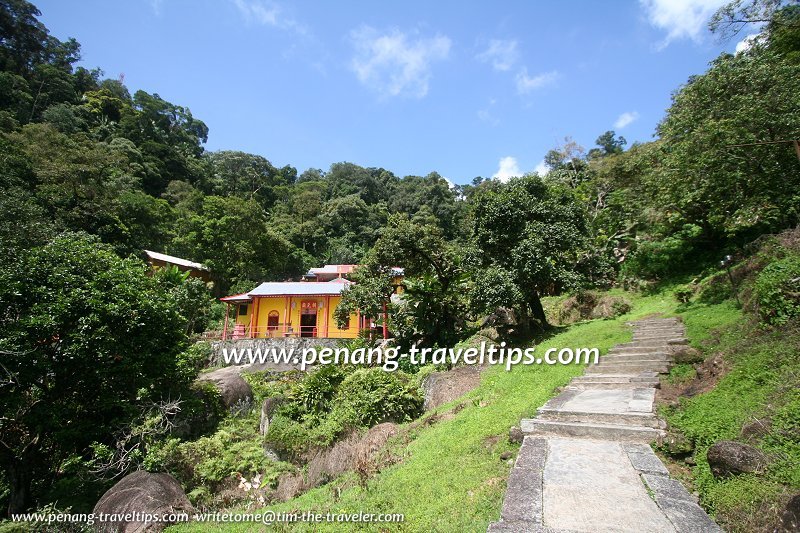 Path to Cheng Kon Sze (11 October 2008)
To me, this is the temple off off off the beaten track. It occupies a natural basin a distance below the Ayer Itam Dam, and is usually so remote that people think twice before deciding to pay it a visit. Also written as Cheng Jee Chan or Cheng Kuan Soo, this temple derived its name from the over a thousand granite steps laid by early devotees to reach it.
Cheng Kon Sze Temple was built in 1880. Over the centuries, it has undergone repeated restoration and renovation. According to the entrance arch, it was rebuilt on 15 September 1985. The most recent round of makeover to the whole complex appears to have been carried out quite recently, probably in 2007, At the time of my visit in 2008, the temple looked like it has received a new coat of paint not too long ago.
 Pathway to Cheng Kon Sze (11 October 2008)
Cheng Kon Sze comprises an entrance archway, three temple halls and an ancestral hall. To the right of the temple are a few private homes belonging to the temple caretaker. A short distance below the temple is a pond in the shape of a crescent moon. The temple grounds is well maintained, and landscaped with torch ginger and a profusion of flowering plants. Here and there are Australian custard apple trees (a variety of the local nona) and papaya trees.
The entrance arch into Cheng Kon Sze Temple carries the name Chau Yuen Tong. I am not sure why it is given the name "Tong", which means cave, just like Sam Poh Tong or Perak Tong. I suppose the temple really was built over a cave which I did not see. The Chau Yuen Tong archway is located about one hundred meters to the east of the temple halls, and positioned in such a way that it aligns with the three halls. All three halls face east, though not perfectly aligned to the east cardinal point, but a small degree north (see accompanyng map).
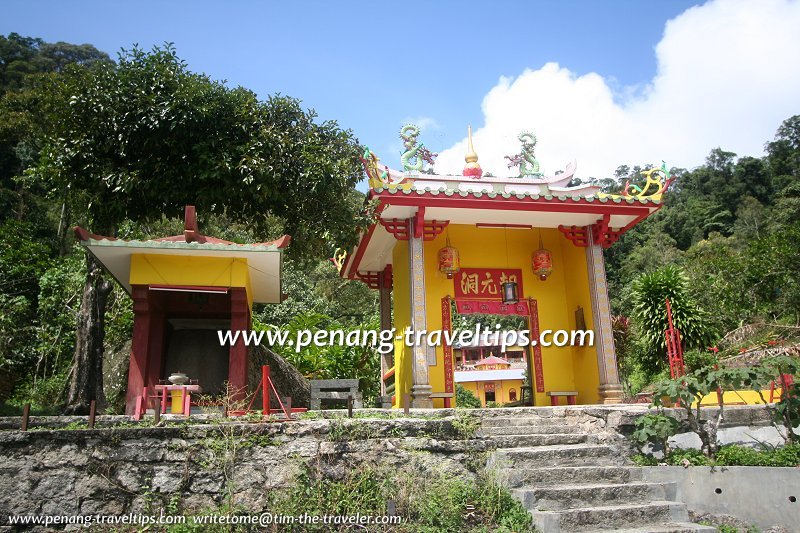 Approaching Cheng Kon Sze Temple (11 October 2008)
A winding path leads from Chau Yuen Tong to the temple. From the doorway, you can view the three temple halls together, almost one above the other. They are painted bright yellow, as is the Chau Yuen Tong archway, an indication that they are dedicated to the Taoist female deity, Doumu (also written Tow Boo and Toe Boe) and her nine offsprings, the Nine Emperor Gods. These are the same deities as in the Butterworth Tow Boo Kong Temple and the Penang Toe Boe Keong Kew Ong Tai Tay Temple.
The lowest temple hall is called Chau Yuen Miau. It is a rectangular structure. The front entrance of Chau Yuen Miau has a portico with two pillars, and lanterns hanging from the ceiling. On both sides are windows topped with decorative arches. On the side of Chau Yuen Miau are paintings of legends, animals and landscapes. On a header plaque is the name of the temple.
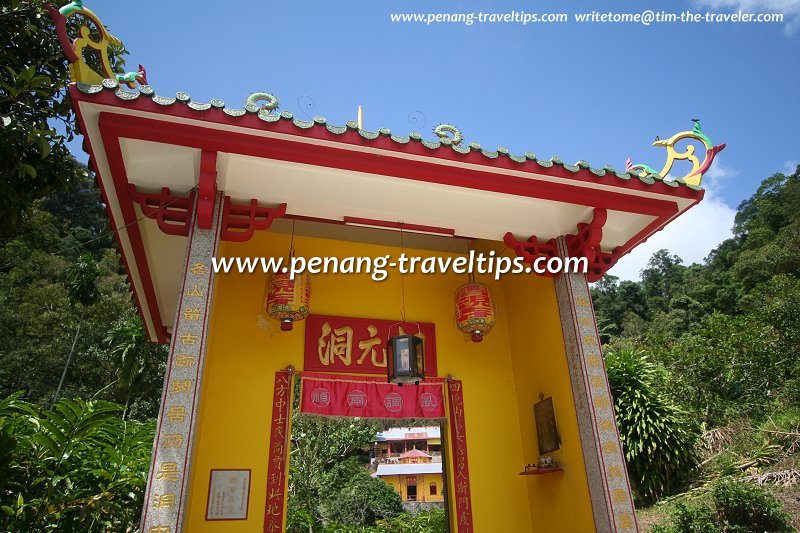 Chau Yuen Tong, entrance archway to Cheng Kon Sze (11 October 2008)
A flight of steps take us to the middle hall, called Yuen Ming Kong. This is the hall of the deity Doumu. The hall is unique among the structures in the complex as it is octagonal, like a pagoda. The same arch motif that appear on the Chau Yuen Miau is repeated here over its doors and windows.
Another flight of steps take us to the main hall of the temple, Cheng Kon Sze. It has a much bigger porch than the two earlier halls. At the porch is a statue of a priest depicted riding a tiger. From Cheng Kon Sze, you get a panoramic view of Paya Terubong and Farlim. High rise apartments dot the landscape hemmed in by the hills.
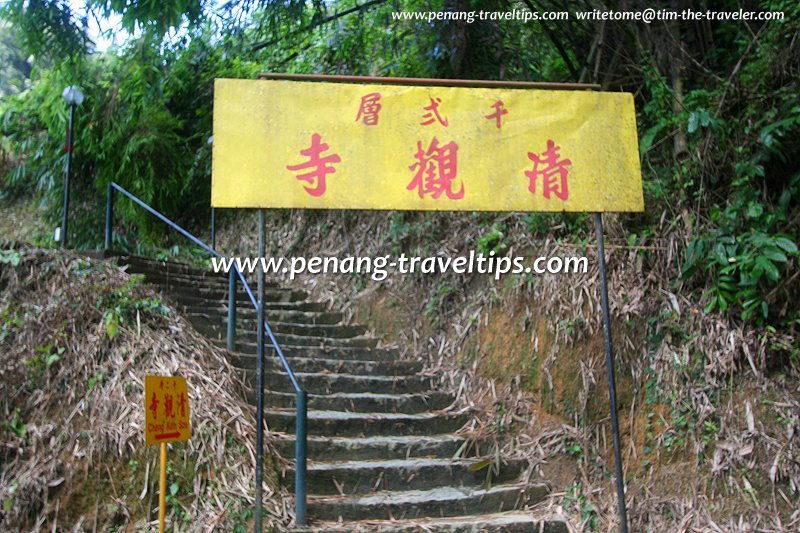
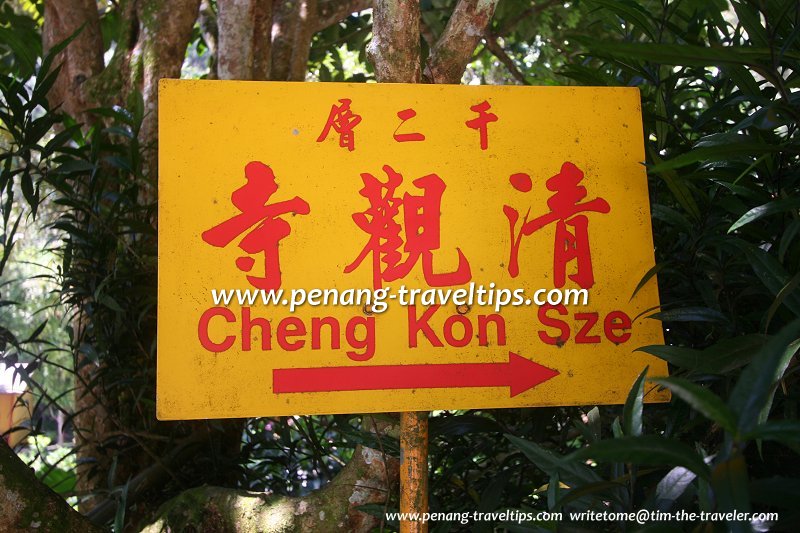 Roadsign pointing the way to Cheng Kon Sze.(11 October 2008)
To the left of Cheng Kon Sze is an ancestral hall. Inside this hall are ancestral tablets. On the walls are photographs taken a few decades ago. Some show celebrations at Cheng Kon Sze in the 1940's.
Getting there
Cheng Kon Sze can be approached by climbing the steps from the United Hokkien Cemetery in Paya Terubong, or by car using the road from Kek Lok Si Temple. The distance is 1.4km (4580 ft).Climbing the steps will take you about one hour, probably more if you stop often. You can reach the temple by car in approximately 15 minutes, going through the bumpy hill road. Take the road that leads to Ayer Itam Dam. Turn in at the archway to the Kek Lok Si Goddess of Mercy Statue.
Drive through Kek Lok Si, the Goddess of Mercy Statue (at time of writing, a pavilion is under construction to shelter it), past the Kek Lok Si Columbarium, and watch out for the sign pointing to Cheng Kon Sze. Follow the small, yellow sign through the hill road, and it will lead you to the temple. The one-way distance is 3.7 km (2.3 miles).
View Cheng Kon Sze Temple, Penang in a larger map
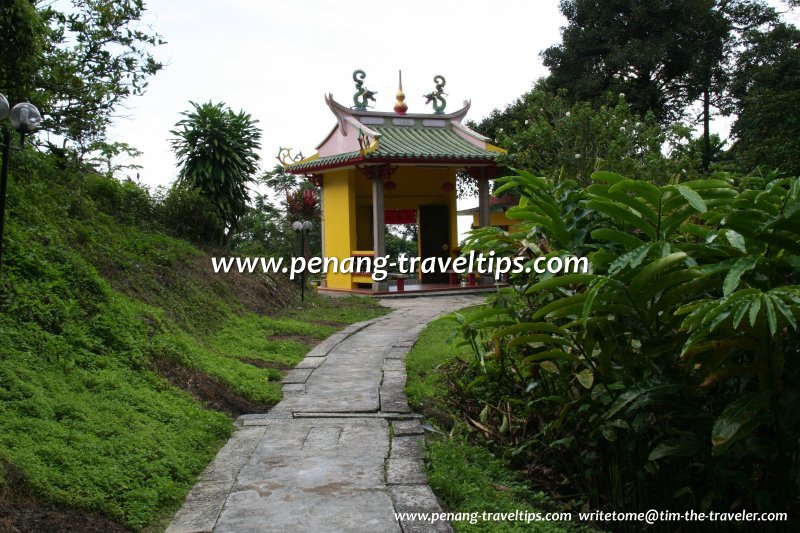 View of Chau Yuen Tong from path (11 October 2008)
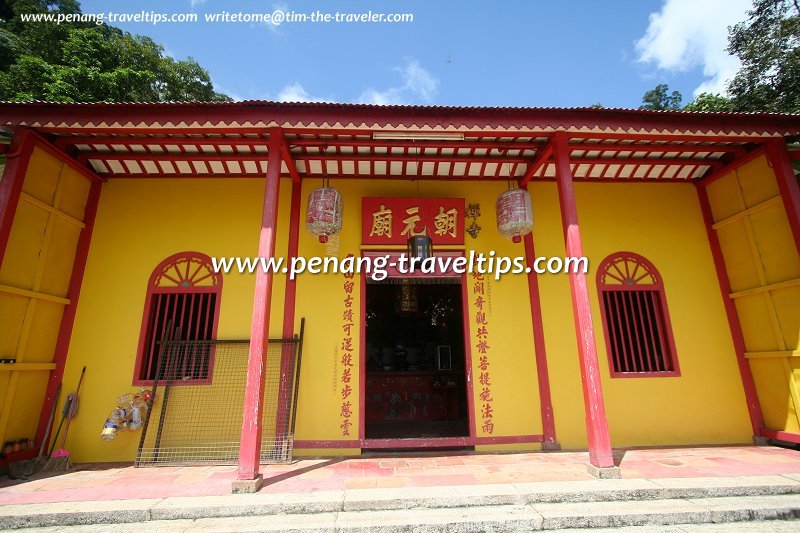 Chau Yuen Miau, Cheng Kon Sze (11 October 2008)
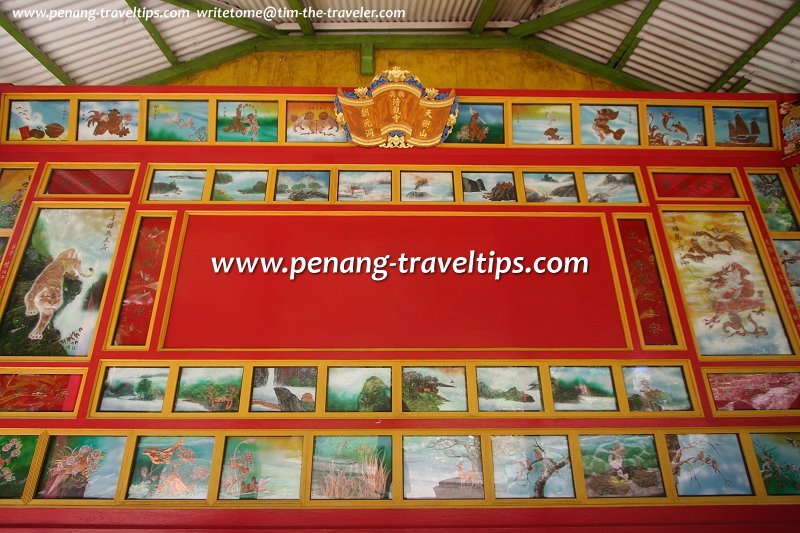 Murals at Chau Yuen Miau (11 October 2008)
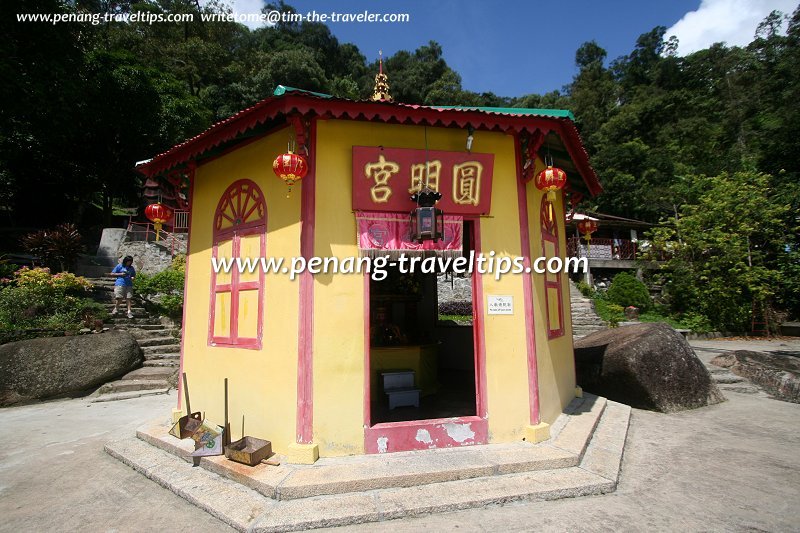 Yuen Ming Kong octagonal hall, Cheng Kon Sze (11 October 2008)
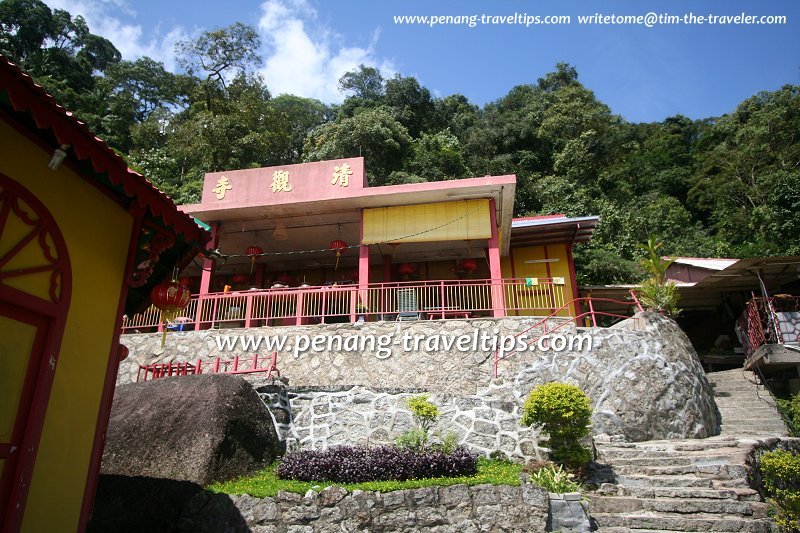 View of Cheng Kon Sze main hall from Yuen Ming Kong (11 October 2008)
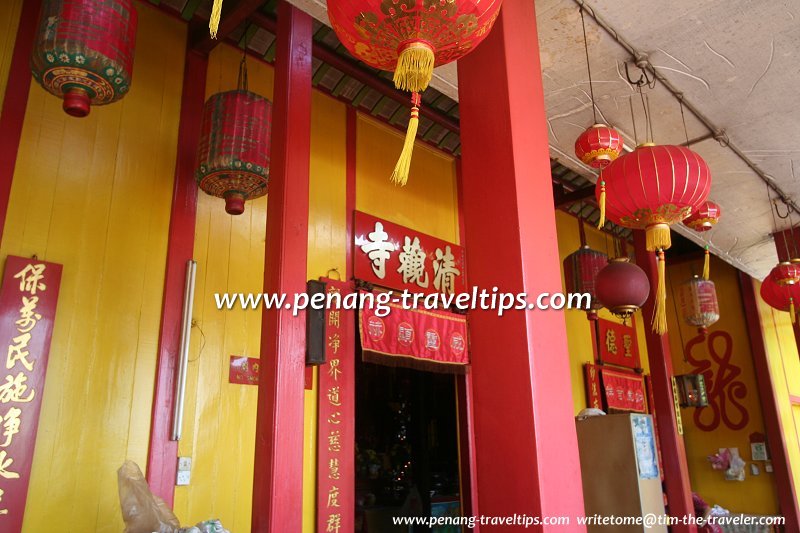 Porch of Cheng Kon Sze (11 October 2008)
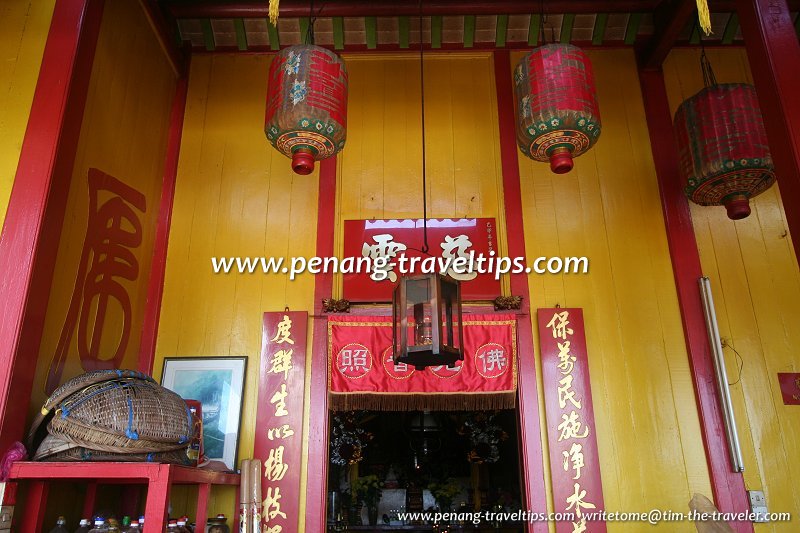 One of the shrines within Cheng Kon Sze (11 October 2008)
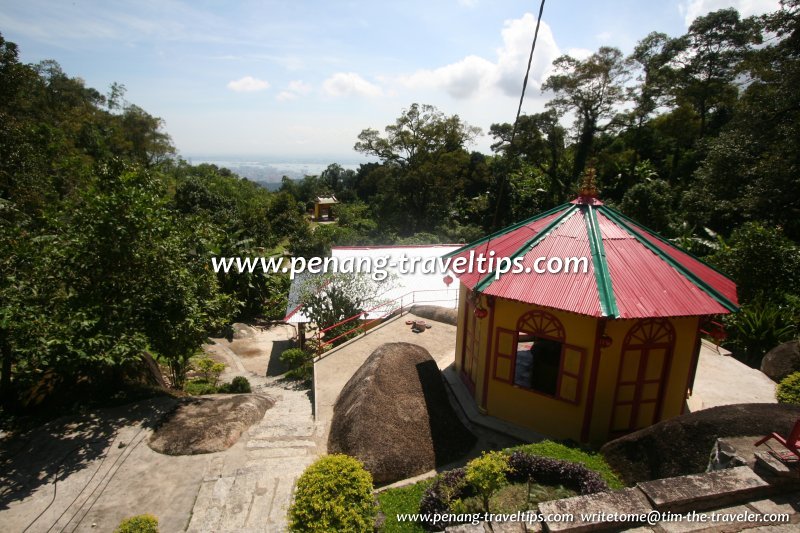 View from Cheng Kon Sze (11 October 2008)
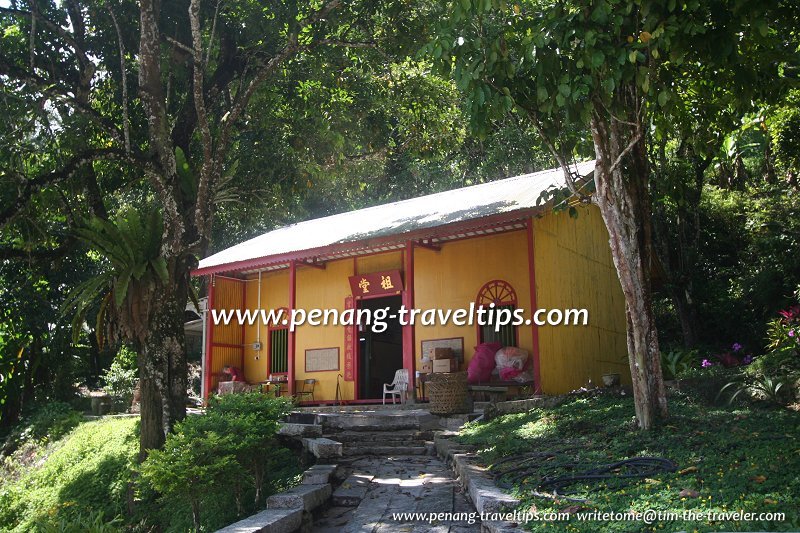 Cheng Kon Sze Ancestral Hall (11 October 2008)
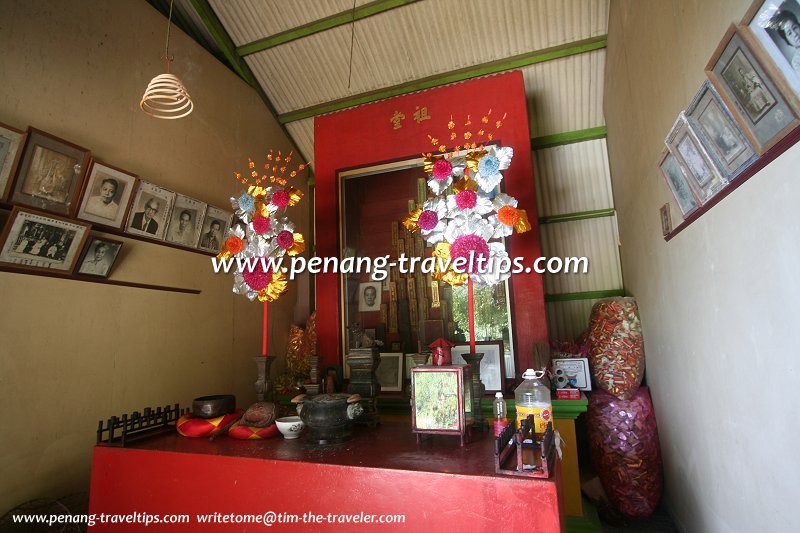 Inside Cheng Kon Sze Ancestral Hall (11 October 2008)
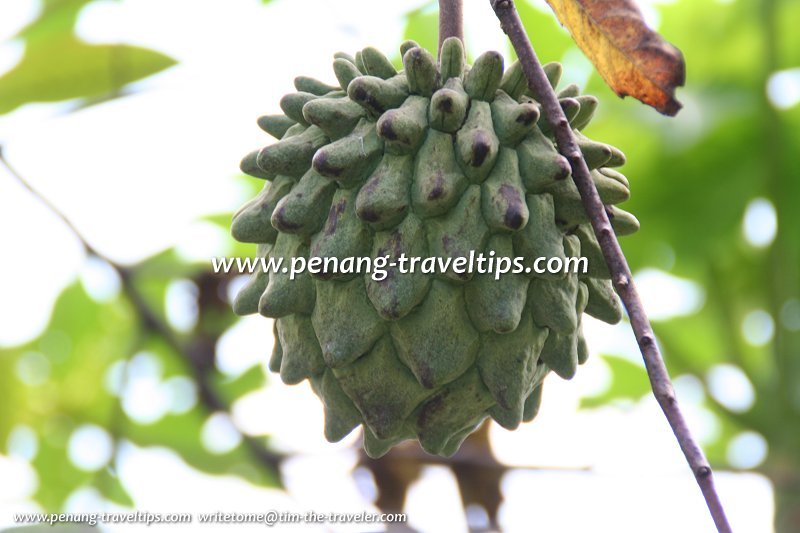 Australian custard apple at Cheng Kon Sze Temple (11 October 2008)
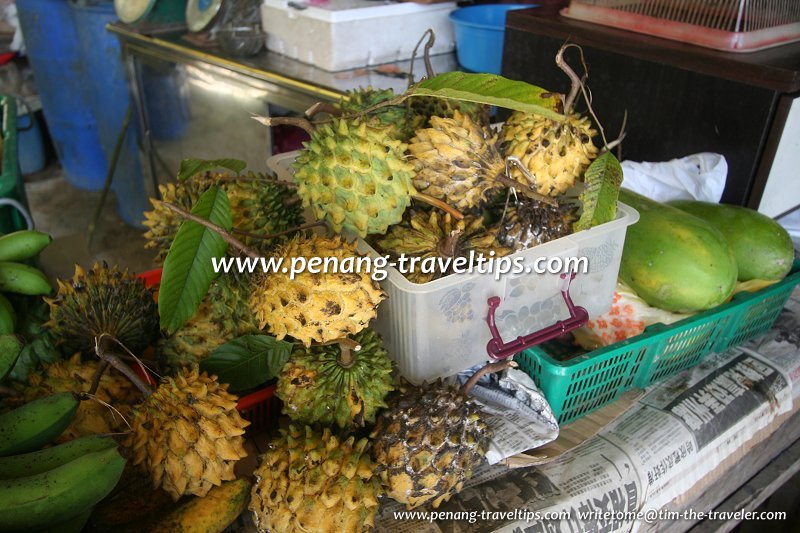 Australian custard apple at Cheng Kon Sze Temple (11 October 2008)
List of Chinese Temples in Penang and Chinese Temples in Malaysia
 Buy, rent or sell properties in Penang
Do you have a property for sale or to rent out? Are you looking to buy or rent a property? Get in touch with me. WhatsApp me (Timothy Tye) at 012 429 9844, and I will assign one of my property agents to serve you. I will choose the agent for you, according to your property needs. So when you message me, provide me some details of what you need, whether to sell, to buy, to rent or to rent out, and what type of property, is it condo, apartment, house, shop, office or land.Adakah anda mempunyai hartanah untuk dijual atau disewakan? Adakah anda ingin membeli atau menyewa hartanah? Hubungi saya. WhatsApp saya (Timothy Tye) di 012 429 9844, dan saya akan menugaskan salah seorang ejen hartanah saya untuk berkhidmat kepada anda. Saya akan pilih ejen untuk anda, mengikut keperluan hartanah anda. Oleh itu, apabila anda menghantar mesej kepada saya, berikan saya beberapa butiran tentang apa yang anda perlukan, sama ada untuk menjual, untuk membeli, untuk disewakan atau untuk disewakan, dan jenis hartanah apakah itu kondo, pangsapuri, rumah, kedai, pejabat atau tanah.
您有待出售或出租的房产吗? 您想购买或租赁房产吗? 与我联系。 WhatsApp 我 (Timothy Tye) 012 429 9844,我将指派一名房地产经纪人为您服务。 我会根据您的房产需求,为您选择代理。 因此,当您给我发消息时,请向我提供一些您需要的详细信息,无论是出售、购买、出租还是出租,以及房产类型,是公寓、公寓、房屋、商店、办公室还是土地。
New Properties in Penang
Looking to buy property in Penang? Get the e-brochures right here without having to visit or contact individual developers.- Anggun Residences E-Brochure, Batu Kawan
- Aston Acacia E-Brochure, Bukit Mertajam
- Beacon Executive Suites E-Brochure, George Town
- Beverly Heights @ Bukit Gambir E-Brochure, Gelugor
- BM Highland E-Brochure, Bukit Mertajam
- Cypress Villa E-Brochure, Sungai Ara
- D'Zone Condominium E-Brochure, Teluk Kumbar
- Elements Garden E-Brochure, Butterworth
- Ferringhi Residence 2 E-Brochure, Batu Ferringhi
- GEM Residences E-Brochure, Prai
- Golden Triangle 2 E-Brochure, Sungai Ara/Relau
- Grace Residence E-Brochure, Jelutong
- Granito @ Permai E-Brochure, Tanjong Bungah
- Green City Residence E-Brochure, Jelutong
- Havana Beach Residences E-Brochure, Bayan Lepas
- Imperial Residences E-Brochure, Sungai Ara/Relau
- Imperial Grande E-Brochure, Sungai Ara/Relau
- Lucerne Residence E-Brochure, Bayan Lepas
- Mezzo @ The Light City E-Brochure, Gelugor
- Middleton E-Brochure, Gelugor
- Orchard Villa 3 E-Brochure, Simpang Ampat
- Primero Heights E-Brochure, Permatang Pauh
- Queens Waterfront Q2 E-Brochure, Bayan Lepas
- Royale Heights @ Tambun Royale City E-Brochure, Simpang Ampat
- Royale Infinity @ Tambun Royale City E-Brochure, Simpang Ampat
- Rubica @ Harbour Place E-Brochure, Butterworth
- Sensasi Commercial Suites E-Brochure, Batu Kawan
- Setia Sky Ville E-Brochure, Jelutong
- Setia Sky Vista E-Brochure, Sungai Ara/Relau
- Setia V Residence E-Brochure, Gurney Drive
- Sinaran Residence E-Brochure, Batu Kawan
- Sky @ TriPark E-Brochure, Bukit Mertajam
- Skyridge Garden E-Brochure, Tanjong Tokong
- Starhill Luxury Residences E-Brochure, Gelugor
- Straits Residences E-Brochure, Tanjong Tokong
- Taman Nuri Emas E-Brochure, Nibong Tebal
- The Light Collection IV E-Brochure, Gelugor
- The Loft @ Southbay E-Brochure, Batu Maung
- The Terraces Condominium E-Brochure, Bukit Jambul
- Trehaus Condo Villas E-Brochure, Bukit Jambul
- Triuni Residences E-Brochure, Batu Uban
- Urban Suites E-Brochure, Tanjong Tokong
- Valencia Residence E-Brochure, Bayan Lepas
- Vertu Resort E-Brochure, Batu Kawan
- Vivo Executive Apartment E-Brochure, Batu Kawan
- Viluxe E-Brochure, Batu Kawan
- Waterside Residence E-Brochure, Gelugor
Latest updates on Penang Travel Tips
Discover with Timothy YouTube Channel
PG Food Channel
Learn Penang Hokkien YouTube Channel
SojiMart Videos
Share your travels and/or ask a travel-related question
Join the Penang Travel Tips Facebook Group to share photos, tips and anything related to your travels, or ask travel-related questions.
 Map of Roads in Penang
Looking for information on Penang? Use this Map of Roads in Penang to zoom in on information about Penang, brought to you road by road. Discover with Timothy
Let me take you to explore and discover Penang through my series of walking tours on YouTube. You may use these videos as your virtual tour guide. At the beginning of each video, I provide the starting point coordinates which you may key into your GPS, Google Maps or Waze, to be navigated to where I start the walk, and use the video as your virtual tour guide.Disclaimer
Please use the information on this page as guidance only. The author endeavours to update the information on this page from time to time, but regrets any inaccuracies if there be any.Latest from Discover with Timothy: Gurney Bay - what to see and do there
About this website

Hello and thanks for reading this page. My name is Timothy and my hobby is in describing places so that I can share the information with the general public. My website has become the go to site for a lot of people including students, teachers, journalists, etc. whenever they seek information on places, particularly those in Malaysia and Singapore. I have been doing this since 5 January 2003, for over twenty years already. You can read about me at Discover Timothy. By now I have compiled information on thousands of places, mostly in Peninsular Malaysia and Singapore, and I continue to add more almost every day. My goal is to describe every street in every town in Malaysia and Singapore.
Robbie's Roadmap
- Episode 1: Robbie's Journey to Financial Freedom
- Episode 2: Lost in America
- Episode 3: The Value of Money
- Episode 4: The Mentor
- Episode 5: The Thing that Makes Money
- Episode 6: The walk with a Billionaire
- Episode 7: The Financial Freedom Awakening
- Episode 8: Meet Mr Washington
- Episode 9: The Pizzeria Incident
Copyright © 2003-2024 Timothy Tye. All Rights Reserved.